Which propagation method is best for different types of plants
There are several ways to propagate plants, but the best method depends on the type of plant you’re growing. Some plants root easily from cuttings, while others are better grown from seed, division, or layering.
Choosing the right method improves success rates and helps you grow stronger, healthier plants.
Quick answer: best propagation methods
Use cuttings for houseplants and soft-stem plants, division for clump-forming perennials, seeds for annuals and vegetables, and layering for woody or climbing plants. Matching the method to the plant type gives the best results.
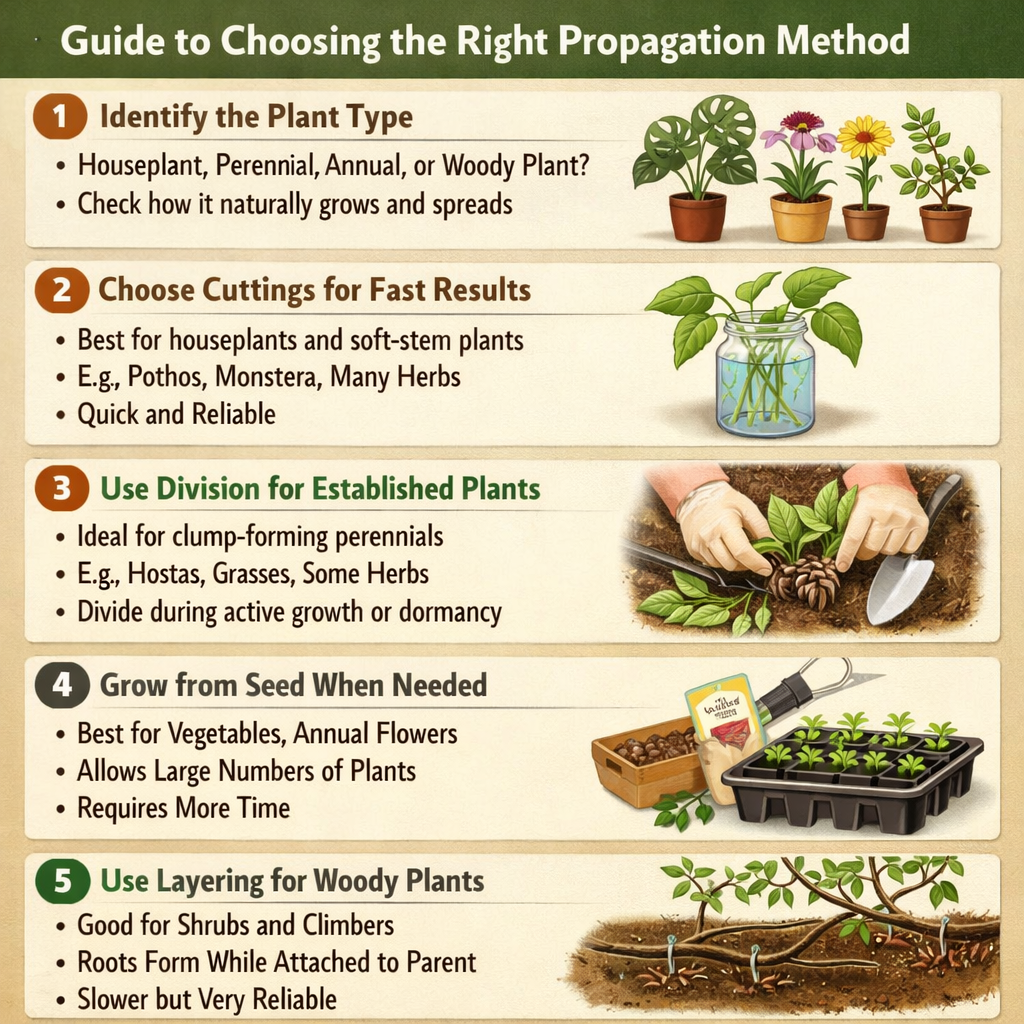
Step-by-step guide to choosing the right propagation method
Step 1: Identify the plant type
- Determine if it’s a houseplant, perennial, annual, or woody plant
- Check how it naturally grows and spreads
Step 2: Choose cuttings for fast results
- Best for houseplants and soft-stem plants
- Includes pothos, monstera, and many herbs
- Quick and reliable
Step 3: Use division for established plants
- Ideal for clump-forming perennials
- Includes hostas, grasses, and some herbs
- Done during active growth or dormancy
Step 4: Grow from seed when needed
- Best for vegetables, annual flowers, and some herbs
- Allows large numbers of plants
- Requires more time
Step 5: Use layering for woody plants
- Suitable for shrubs and climbers
- Roots form while still attached to the parent plant
- Slower but very reliable
Best propagation methods by plant type
Houseplants
Herbs
- Seeds or cuttings
- Basil (seed), mint (cuttings)
Perennials
- Division or basal cuttings
- Examples: lupins, delphiniums
Vegetables
Climbers and shrubs
- Layering or cuttings
- Examples: wisteria, some woody plants
Bulbs and tubers
Ideal conditions for successful propagation
- Light
- Bright, indirect light for most methods
- Temperature
- Warm, stable conditions
- Moisture
- Lightly moist, not waterlogged
- Hygiene
- Clean tools and compost
Consistency improves success across all methods.
Common problems
Cuttings not rooting
- Cause: wrong plant type or missing node
- Fix: choose correct method and technique
Rotting cuttings or seedlings
- Cause: overwatering
- Fix: improve drainage and airflow
Slow growth
- Cause: low light or temperature
- Fix: improve conditions
Climate and regional notes
UK & Ireland
- Indoor propagation often needed in early season
- Outdoor propagation improves later in the year
Europe
- Northern regions rely more on indoor starts
- Southern regions allow more outdoor propagation
USA
- Wide variation depending on climate
- Warmer regions allow longer propagation windows
Pro tips for better propagation
- Match the method to the plant type
- Take multiple cuttings to improve success
- Use fresh, healthy plant material
- Label different propagation attempts
- Be patient — some methods take time
FAQs: plant propagation methods
What is the easiest propagation method
Cuttings are usually the easiest and fastest method.
Which plants grow best from cuttings
Houseplants and soft-stem plants like pothos and herbs.
When should I use division
For mature, clump-forming perennials.
Are seeds the best method for all plants
No, some plants are better propagated vegetatively.
What is layering
A method where stems root while still attached to the parent plant.
Can all plants be propagated the same way
No, different plants require different methods.
Why are my cuttings not rooting
Often due to incorrect technique or poor conditions.
Is propagation difficult
Most methods are simple with the right approach.
Do I need special equipment
Basic tools and compost are usually enough.
How long does propagation take
Varies from days (cuttings) to months (some seeds or layering).