How to plant Lilies in Spring
Lilies are elegant, easy-to-grow bulbs that produce striking flowers throughout summer. Planting them in spring gives them time to establish strong roots and produce reliable blooms in their first season.
They work well in borders, containers, and cut flower gardens, making them a versatile addition to any space.
Quick answer: how to plant lilies
To plant lilies in spring, place bulbs 10–15cm deep in well-drained soil, position them in full sun or partial shade, and water lightly after planting. Ensure good drainage and space bulbs properly to allow for healthy growth.
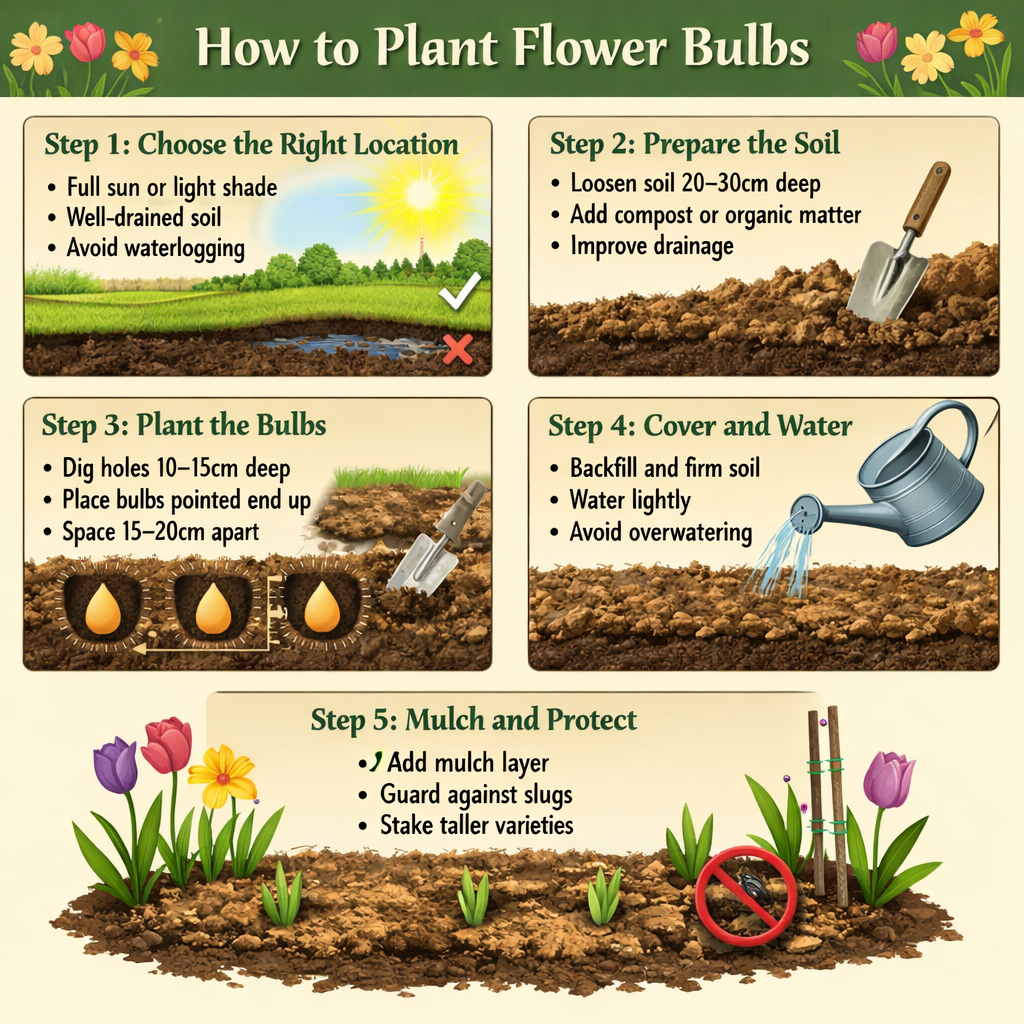
Step-by-step guide to planting lilies
Step 1: Choose the right location
- Select a spot with full sun or light shade
- Ensure well-drained soil
- Avoid areas prone to waterlogging
Step 2: Prepare the soil
- Loosen soil to around 20–30cm depth
- Mix in compost or organic matter
- Improve drainage if needed (especially in heavy soils)
Step 3: Plant the bulbs
- Dig holes 10–15cm deep
- Place bulbs with the pointed end facing upwards
- Space bulbs 15–20cm apart
Step 4: Cover and water
- Backfill with soil and firm gently
- Water lightly to settle the soil
- Avoid overwatering
Step 5: Mulch and protect
- Apply a light mulch to retain moisture
- Protect emerging shoots from slugs
- Stake taller varieties if needed later
When to plant lilies
Lilies are typically planted:
- In spring once soil is workable
- When conditions are not frozen or waterlogged
- Early enough to establish before summer growth
Spring planting allows bulbs to flower in the same year.
Best lily varieties
- Asiatic lilies
- Early flowering
- Easy to grow and reliable
- Oriental lilies
- Large, fragrant blooms
- Flower later in summer
- Trumpet lilies
- Tall and dramatic
- Strong scent
- LA hybrids
- Cross between Asiatic and longiflorum
- Vigorous and versatile
Choose based on flowering time, height, and fragrance preference.
Ideal growing conditions
- Light
- Full sun to partial shade
- Soil
- Well-drained and fertile
- Slightly acidic to neutral
- Water
- Moderate watering
- Avoid waterlogged conditions
- Feeding
- Apply a balanced fertiliser during growth
- Switch to high-potassium feed before flowering
Common problems
Bulb rot
- Cause: poor drainage
- Fix: improve soil and avoid overwatering
No flowers
- Cause: insufficient light or nutrients
- Fix: improve positioning and feeding
Slug damage
- Cause: young shoots are vulnerable
- Fix: protect early growth
Weak stems
- Cause: lack of support or poor conditions
- Fix: stake taller varieties
Climate and regional notes
UK & Ireland
- Plant in spring once soil is workable
- Most lilies perform well outdoors
Europe
- Similar planting window across northern regions
- Southern regions may plant earlier
USA
- Plant after frost risk has passed
- Timing varies by climate zone
Pro tips for better results
- Plant bulbs in groups for stronger visual impact
- Use grit or sand in heavy soil to improve drainage
- Deadhead spent flowers to redirect energy
- Allow foliage to die back naturally after flowering
- Lift and divide bulbs every few years if overcrowded
FAQs: planting lilies
When is the best time to plant lilies
In spring, once the soil is workable and not frozen.
How deep should I plant lily bulbs
Around 10–15cm deep, depending on bulb size.
Do lilies need full sun
They prefer full sun but can tolerate light shade.
Can lilies grow in pots
Yes, as long as containers are deep and well-draining.
How often should I water lilies
Water moderately and avoid waterlogging the soil.
Do lilies come back every year
Yes, they are perennials and will return if conditions are right.
Why are my lilies not flowering
Often due to lack of sunlight or poor soil conditions.
Do I need to stake lilies
Taller varieties may need support to prevent bending.
Can I plant lilies in heavy soil
Yes, but improve drainage with compost or grit.
What happens after lilies finish flowering
Allow foliage to die back naturally to feed the bulb for next year.