When to Transplant Tomato Seedlings Outdoors
Getting the timing right for transplanting tomato seedlings is the difference between strong, fast-growing plants and stunted ones that struggle all season. Move them too early, and cold shock can stall growth for weeks. Wait for the right moment, and they’ll take off almost immediately.
Quick Answer
Transplant tomato seedlings outdoors after the last frost has passed and nighttime temperatures stay consistently above 10°C (50°F).
In most regions:
- UK & Ireland: mid–late May
- Cooler climates: late May to early June
- Warmer climates: April to early May
Seedlings should also be 15–25cm tall, with thick stems and several true leaves, and properly hardened off before planting.
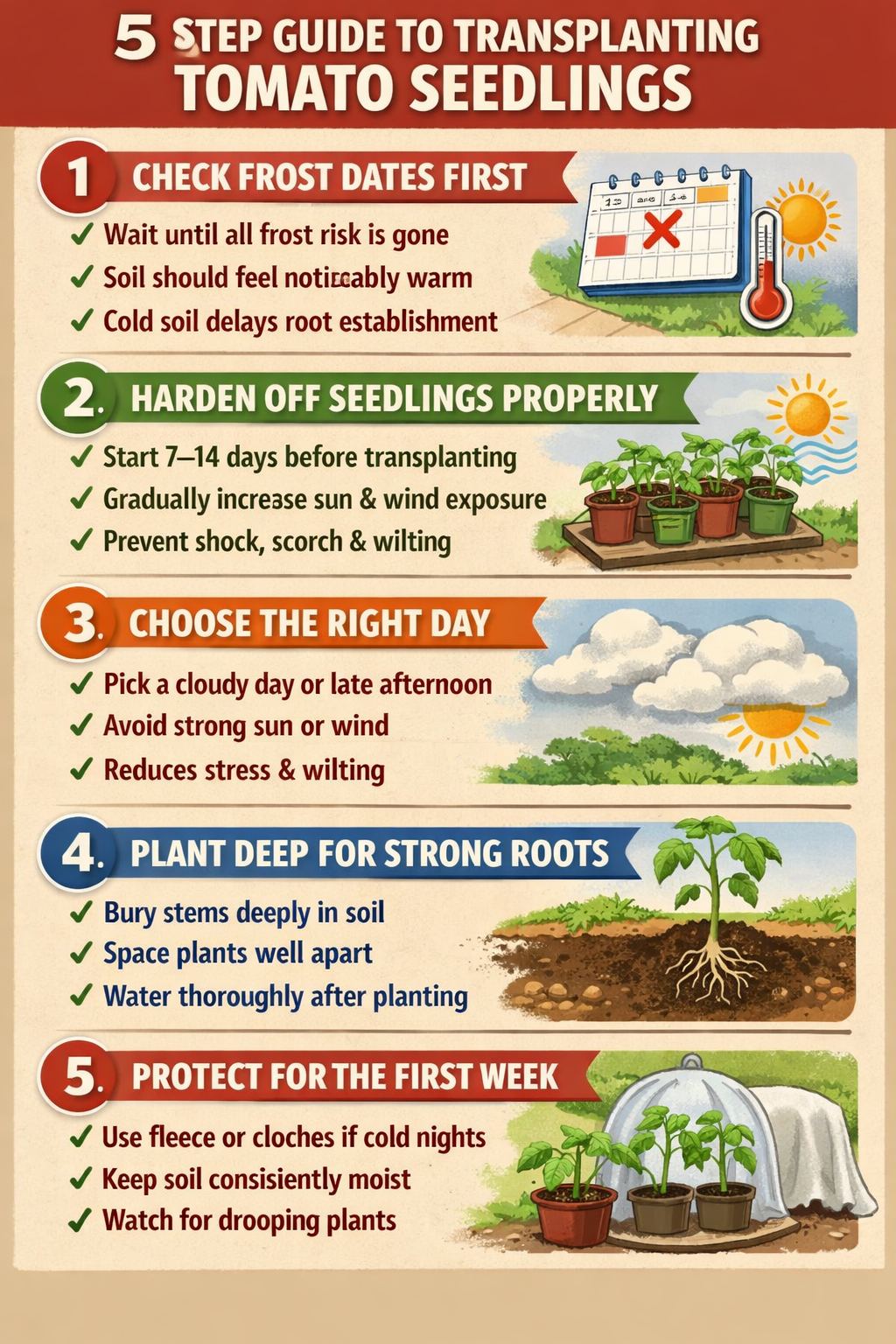
5 Step Guide to Transplanting Tomato Seedlings
1. Check Frost Dates First
Planting too early is the most common mistake.
- Wait until all frost risk is gone
- Soil should feel noticeably warm, not cold
- Cold soil delays root establishment
2. Harden Off Seedlings Properly
Indoor-grown plants need gradual exposure to outdoor conditions.
- Start 7–14 days before transplanting
- Begin with a few hours outside daily
- Increase sun and wind exposure gradually
- Prevents shock, leaf scorch, and collapse
3. Choose the Right Day
Timing the actual move matters more than most expect.
- Pick a cloudy day or late afternoon
- Avoid strong sun or wind
- Reduces stress and wilting
4. Plant Deep for Strong Roots
Tomatoes benefit from deeper planting.
- Bury part of the stem (they grow roots along it)
- Space plants well apart
- Water thoroughly after planting
5. Protect for the First Week
The first few days decide success.
- Use fleece or cloches if nights dip
- Keep soil consistently moist
- Watch for drooping (normal for 1–2 days)
Best Varieties & Why
Some tomato varieties handle outdoor transplanting better than others:
- Roma (Plum Tomatoes)
Strong growers, tolerate variable conditions well - Gardener’s Delight (Cherry)
Quick to establish and forgiving if timing isn’t perfect - Moneymaker
Reliable and widely adapted to UK & Ireland climates - Beefsteak Tomatoes
Thrive once established but need perfect timing and warmth
Common Issues
- Transplant shock
Leaves droop, growth pauses — usually from skipping hardening off - Purple or pale leaves
Cold soil blocking nutrient uptake - Stunted growth
Often caused by planting too early - Scorched leaves
Sudden exposure to strong sun without adjustment
Best Fertiliser, Soil, Lighting & Growing Conditions
Tomatoes respond quickly to the right setup — and just as quickly to the wrong one.
Soil
- Rich, well-draining soil with compost
- Slightly acidic to neutral pH
Feeding
- Start light feeding after 1–2 weeks
- Switch to potash-rich fertiliser once flowering begins
Light
- Full sun is non-negotiable (6–8+ hours daily)
- Low light = weak stems and poor fruiting
Watering
- Deep, consistent watering
- Avoid letting soil dry out completely
Spacing & Airflow
- Good spacing prevents disease and improves yield
Time of Year
Timing varies depending on climate, but the principle stays the same: warmth first, planting second.
- UK & Ireland: Mid–late May is safest
- Northern Europe: Late May–June
- Southern Europe: April–May
- USA: After last frost (varies by state)
Plant Characteristics
Before transplanting, healthy seedlings should have:
- 2–3 sets of true leaves
- Thick, sturdy stems (not leggy)
- Deep green colour
- Well-developed roots (but not root-bound)
Weak seedlings rarely “catch up” after planting — they usually stay behind all season.
Climate and Regional Notes
UK & Ireland
- Late frosts are common — don’t rush
- Soil warmth is often more important than air temperature
Europe
- Northern regions must wait longer
- Southern areas can transplant earlier but monitor sudden cold snaps
USA
- Follow local last frost dates closely
- In warmer zones, earlier planting is possible but still requires warm soil
Pro Tips
- Warm the soil in advance with black plastic or cloches
- Plant slightly deeper than the seedling pot level
- Pinch off lower leaves before planting for cleaner stems
- Stake or support plants early to avoid root disturbance later
- If in doubt, wait an extra week — tomatoes recover faster from delay than cold damage
FAQ
How big should tomato seedlings be before transplanting?
Around 15–25cm tall with several true leaves and a strong stem.
Can I transplant tomatoes before the last frost?
No — even a light frost can kill or permanently stunt them.
What temperature is too cold for tomatoes?
Below 10°C (50°F) at night will slow or damage growth.
How long should I harden off tomato plants?
Typically 7–14 days for best results
Can I plant tomatoes in April?
Only in warm climates or with protection — too early for most regions.
Why did my tomatoes stop growing after transplanting?
Likely transplant shock or cold soil.
Should I water immediately after transplanting?
Yes — deep watering helps roots settle quickly.
Do tomatoes need full sun after transplanting?
Yes, but introduce it gradually during hardening off.
Can leggy seedlings recover outdoors?
Yes — plant them deeper to stabilise and strengthen growth.
What happens if I transplant too late?
Plants will still grow, but you may lose early harvest potential.
Related Guides
If you want stronger seedlings and smoother transplanting:
- Improve early plant strength → click here
- Master the transition outdoors → click here
- Fix weak or struggling seedlings → click here
Closing
Transplanting tomatoes isn’t about the calendar — it’s about conditions. When the nights are warm, the soil feels alive, and your seedlings are properly prepared, everything clicks into place. Get that timing right, and you’ll see rapid growth, stronger plants, and a noticeably better harvest.