How to prevent damping off in seedlings
Damping off is one of the most common and frustrating problems when growing from seed. It causes young seedlings to suddenly collapse at the base, often just after germination.
The good news is that damping off is largely preventable with the right conditions and care.
Quick answer: how to prevent damping off
To prevent damping off, use clean seed compost, avoid overwatering, improve airflow, and keep seedlings in bright, stable conditions. Good hygiene and balanced moisture are key.
Step-by-step guide to preventing damping off
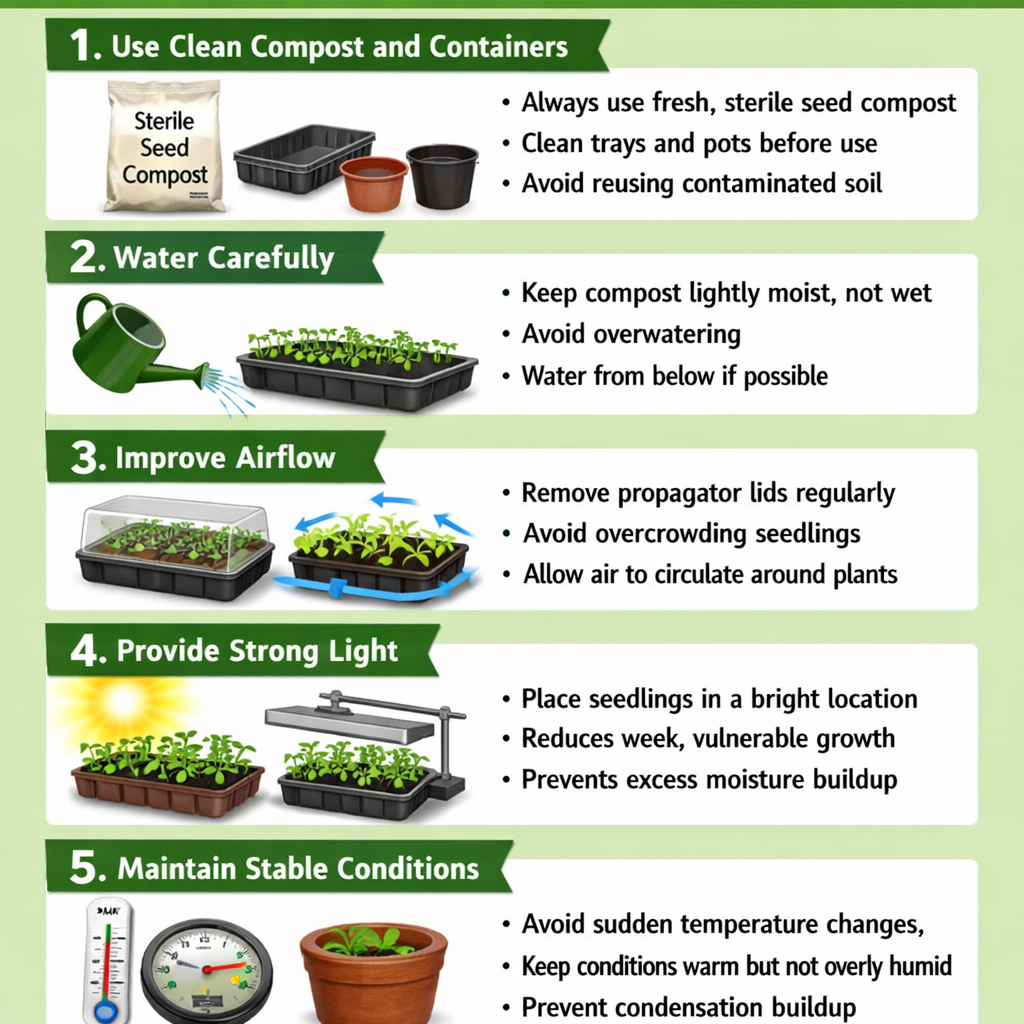
Step 1: Use clean compost and containers
- Always use fresh, sterile seed compost
- Clean trays and pots before use
- Avoid reusing contaminated soil
Step 2: Water carefully
- Keep compost lightly moist, not wet
- Avoid overwatering
- Water from below if possible
Step 3: Improve airflow
- Remove propagator lids regularly
- Avoid overcrowding seedlings
- Allow air to circulate around plants
Step 4: Provide strong light
- Place seedlings in a bright location immediately
- Reduces weak, vulnerable growth
- Prevents excess moisture buildup
Step 5: Maintain stable conditions
- Avoid sudden temperature changes
- Keep conditions warm but not overly humid
- Prevent condensation buildup
When damping off occurs
Damping off usually happens:
- Shortly after germination
- In warm, humid conditions
- When seedlings are young and vulnerable
Early prevention is much easier than trying to fix it.
Plants most affected
- Tomatoes
- Basil
- Lettuce
- Peppers
- Many flower seedlings
Most seedlings can be affected if conditions are poor.
Ideal conditions to prevent damping off
- Moisture
- Evenly moist, not saturated
- Airflow
- Good ventilation at all times
- Light
- Bright conditions from early growth
- Hygiene
- Clean compost and containers
Balance is the key factor.
Common problems
Seedlings collapsing at soil level
- Cause: fungal infection
- Fix: remove affected seedlings and improve conditions
White mould on soil
- Cause: excess moisture
- Fix: increase airflow and reduce watering
Slow or weak growth
- Cause: poor light or airflow
- Fix: adjust environment
Recurring issues
- Cause: contaminated materials
- Fix: start again with clean setup
Climate and regional notes
UK & Ireland
- Common due to indoor propagation conditions
- Ventilation is essential
Europe
- Northern regions face similar risks
- Southern regions may have fewer humidity issues
USA
- Varies by humidity and setup
- Indoor growing conditions are key
Pro tips for healthy seedlings
- Sow seeds thinly to reduce overcrowding
- Remove covers once seeds germinate
- Use fans or airflow in indoor setups
- Avoid watering late in the day
- Act quickly at first signs of problems
FAQs: damping off in seedlings
What is damping off
A fungal disease that causes seedlings to collapse and die.
What causes damping off
Excess moisture, poor airflow, and contaminated compost.
Can seedlings recover from damping off
No, affected seedlings usually cannot be saved.
How do I stop damping off
Improve hygiene, airflow, and watering practices.
Is damping off common
Yes, especially in indoor seed starting.
Can I reuse soil after damping off
It is not recommended.
Does light help prevent damping off
Yes, strong light reduces weak growth.
Should I remove affected seedlings
Yes, immediately to prevent spread.
Can I prevent damping off completely
You can greatly reduce the risk with proper care.
Is a propagator bad for seedlings
Only if airflow is restricted for too long.