Why Is There White Powder on My Leaves?
If you’re seeing a white, dusty coating on your plant leaves, you’re almost certainly dealing with powdery mildew—one of the most common plant problems for beginners and experienced gardeners alike.
The good news: it looks alarming, but it’s usually manageable if you act early.
Quick Answer
- White powder on leaves = powdery mildew (fungal disease)
- Caused by poor airflow, humidity, and crowded plants
- Treat early with better ventilation and simple remedies
Left untreated, it spreads quickly and weakens the plant.
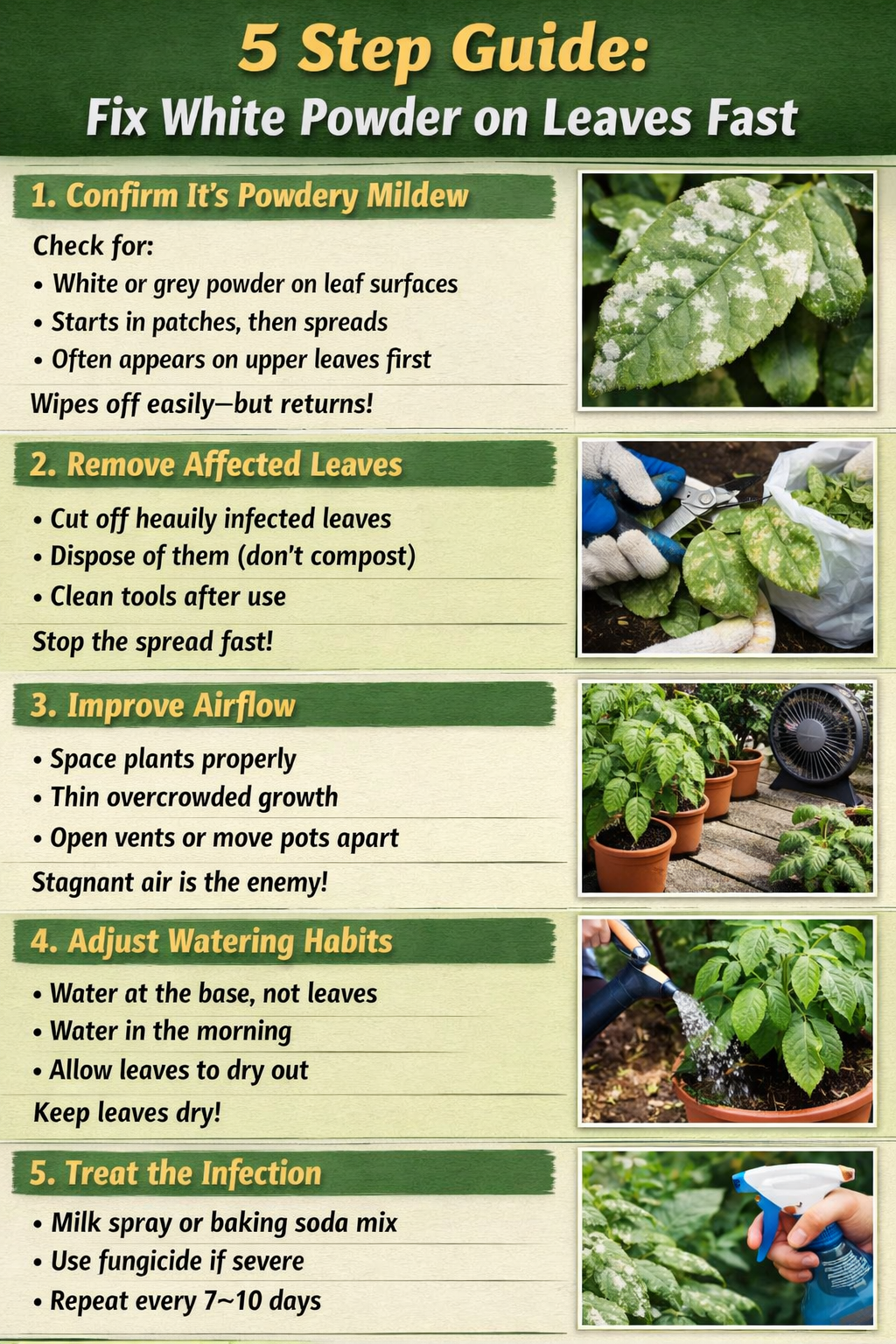
5 Step Guide: Fix White Powder on Leaves Fast
Step 1: Confirm It’s Powdery Mildew
Check for:
- White or grey powder on leaf surfaces
- Starts in patches, then spreads
- Often appears on upper leaves first
It wipes off easily at first—but returns if untreated.
Step 2: Remove Affected Leaves
Act immediately:
- Cut off heavily infected leaves
- Dispose of them (don’t compost)
- Clean tools after use
This slows the spread dramatically.
Step 3: Improve Airflow
This is the root fix:
- Space plants properly
- Thin overcrowded growth
- Open vents (greenhouse) or move pots apart
Still, stagnant air is the main trigger.
Step 4: Adjust Watering Habits
Avoid creating damp conditions:
- Water at the base, not over leaves
- Water in the morning
- Let surfaces dry during the day
Wet + still air = ideal conditions for fungal spread.
Step 5: Treat the Infection
Simple treatments work well:
- Mild milk spray (1:10 with water)
- Baking soda solution (light mix)
- Commercial fungicides if severe
Repeat treatments every 7–10 days until controlled.
Best Varieties & Why (Susceptibility)
More prone to powdery mildew:
- Courgettes
- Cucumbers
- Squash
- Roses
Less prone:
- Herbs like rosemary and thyme
- Many hardy perennials
Some modern varieties are bred for resistance—worth choosing if you’ve had issues before.
Common Issues
Spreads quickly across plants
- Airborne spores move easily
- One infected plant can affect many
Leaves turn yellow and die
- Infection blocks light and reduces photosynthesis
Reduced yield
- Especially in fruiting plants like cucumbers and courgettes
Early action prevents long-term damage.
Growing Conditions (Prevention Focus)
- Full sun where possible
- Good spacing between plants
- नियमित pruning to improve airflow
- Avoid excess nitrogen (causes soft, vulnerable growth)
Pruning:
- Remove dense inner growth
- Keep airflow moving through the plant
Time of Year
- Most common in late spring through summer
- Thrives in warm days and cool nights
- Greenhouses and indoor grows are higher risk year-round
Plant Characteristics
Signs your plant is affected:
- White powdery coating
- Distorted or curling leaves
- Slowed growth
- Premature leaf drop
Healthy plants should have clean, glossy, evenly coloured leaves.
Climate and Regional Notes
UK & Ireland
- High humidity and mild temperatures create ideal conditions
- Common in greenhouses and sheltered gardens
- Airflow management is critical
Europe
- Northern Europe: similar risks to UK
- Southern Europe: dry heat can reduce severity, but still occurs
USA
- Humid regions: high risk
- Dry regions: less frequent, but still possible in crowded plantings
- Indoor growing increases risk everywhere
Pro Tips
- Catch it early—it’s much easier to control
- Always prioritise airflow over treatment sprays
- Do not overcrowd seedlings or mature plants
- Resistant varieties save long-term effort
- Regularly inspect leaves (top and underside)
FAQ
Is powdery mildew dangerous to plants?
Yes—it weakens plants and reduces yield, but rarely kills them outright if managed.
Can plants recover?
Yes, especially if treated early and growing conditions are improved.
Should I remove all infected leaves?
Remove heavily affected ones, but avoid stripping the plant completely.
Does it spread to other plants?
Yes—very easily through airborne spores.
Can I prevent it completely?
Not always, but good airflow and spacing reduce the risk significantly.
Related Guides
Fix watering mistakes that contribute to fungal issues:
→ click here
Understand overall plant health from seed to maturity:
→ click here
Closing
White powder on leaves might look minor at first, but it spreads fast and quietly reduces plant strength.
Focus on airflow, spacing, and early action—not just treatment.
If you stay proactive, powdery mildew becomes a manageable issue rather than a recurring problem.