
How to plant Jerusalem artichokes in March
Jerusalem artichokes are easy-to-grow, hardy tubers that produce tall plants and abundant harvests later in the year. Planting in March gives them a long growing season, resulting in better yields and stronger plants.
They are ideal for low-maintenance growing and can thrive in a wide range of conditions.
Quick answer: how to plant Jerusalem artichokes
To plant Jerusalem artichokes, place tubers 10–15cm deep in well-drained soil, space them well apart, and grow in full sun. Water after planting and allow plants plenty of room, as they grow tall and spread.
Step-by-step guide to planting Jerusalem artichokes
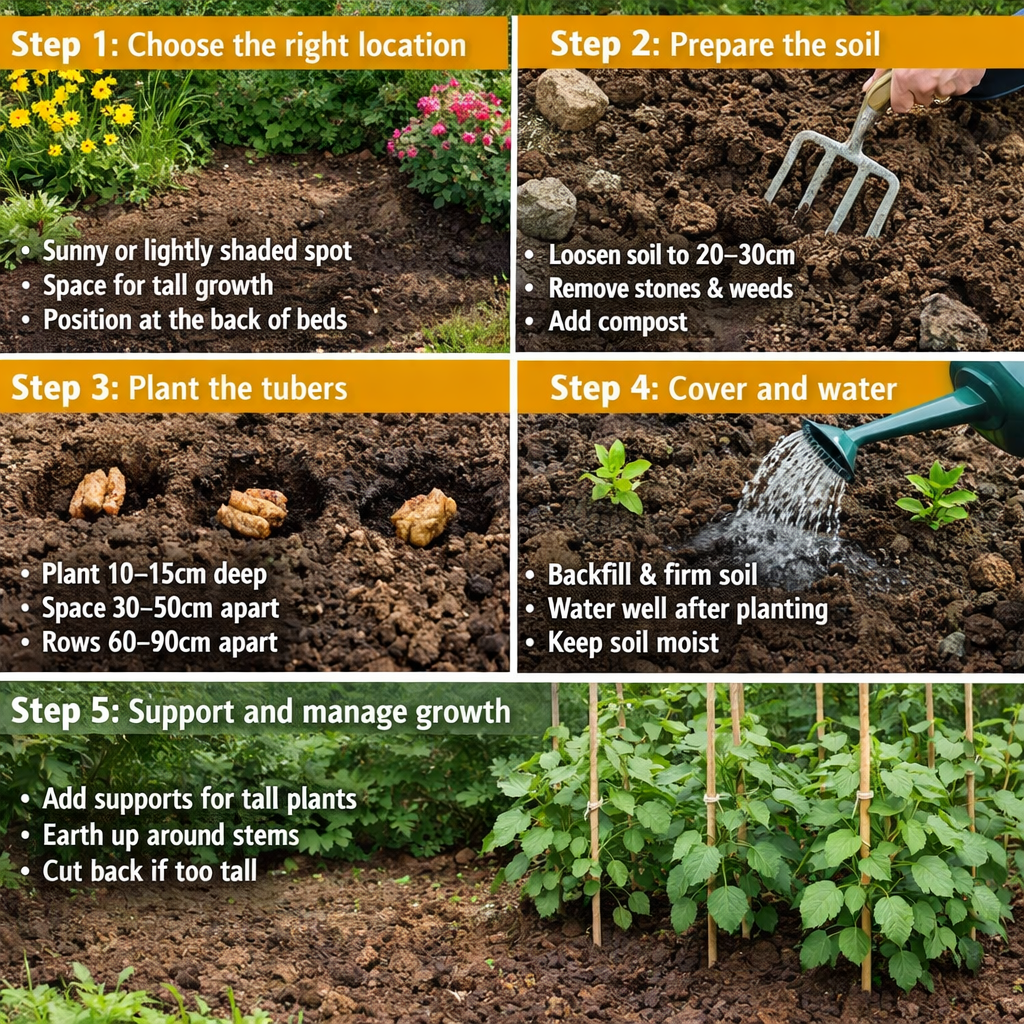
Step 1: Choose the right location
- Select a sunny or lightly shaded spot
- Allow space for tall growth (up to 2–3m)
- Consider positioning at the back of beds
Step 2: Prepare the soil
- Loosen soil to around 20–30cm depth
- Remove large stones and weeds
- Add compost if soil is poor
Step 3: Plant the tubers
- Plant tubers 10–15cm deep
- Space 30–50cm apart
- Space rows around 60–90cm apart
Step 4: Cover and water
- Backfill with soil and firm lightly
- Water well after planting
- Keep soil slightly moist during establishment
Step 5: Support and manage growth
- Add support if exposed to wind
- Earth up soil around stems as they grow
- Cut back if plants become too tall
When to plant Jerusalem artichokes
Jerusalem artichokes are best planted:
- In early to mid-spring (March onwards)
- When soil is workable and not frozen
- Before active growth begins
They establish quickly once planted.
Best varieties
- Fuseau
- Smooth, easy-to-prepare tubers
- Good yield and flavour
- Red Fuseau
- Slightly nuttier taste
- Attractive red skin
- Waldspindel
- High yielding
- Good resistance to disease
Choose based on yield, flavour, and ease of preparation.
Ideal growing conditions
- Light
- Full sun preferred
- Soil
- Tolerant of most soils
- Best in well-drained ground
- Water
- Low maintenance once established
- Water during prolonged dry periods
- Feeding
- Not heavy feeders
- Compost at planting is usually sufficient
Common problems
Uncontrolled spreading
- Cause: tubers left in ground
- Fix: harvest thoroughly and manage spread
Tall plants falling over
- Cause: wind exposure
- Fix: stake or plant in sheltered areas
Small tubers
- Cause: poor soil or overcrowding
- Fix: improve soil and space properly
Knobbly tubers
- Natural characteristic
- Choose smoother varieties like Fuseau if preferred
Climate and regional notes
UK & Ireland
- Plant from March when soil is workable
- Very reliable and hardy crop
Europe
- Suitable across most regions
- Earlier planting possible in milder climates
USA
- Plant in early spring after soil can be worked
- Thrives in a wide range of climates
Pro tips for better results
- Plant in a contained area to control spread
- Harvest after frost for improved flavour
- Leave some tubers if you want plants to return
- Cut back stems in autumn
- Rotate planting areas if possible
FAQs: planting Jerusalem artichokes
When should I plant Jerusalem artichokes
From March onwards, once the soil is workable.
How deep should I plant the tubers
Around 10–15cm deep.
Do Jerusalem artichokes spread
Yes, they can spread easily if not fully harvested.
Do they need full sun
They grow best in full sun but tolerate light shade.
How tall do they grow
Up to 2–3 metres in height.
Can I grow them in containers
Yes, but large containers are needed due to size.
When are they ready to harvest
Typically from late autumn onwards.
Do they need a lot of water
No, they are relatively drought tolerant once established.
Are they easy to grow
Yes, they are one of the easiest root crops to grow.
Do they come back every year
Yes, if tubers are left in the ground, they will regrow.