How to sow parsnip seeds outdoors in March
Parsnips are a classic root crop that benefit from early sowing. Sowing directly outdoors in March gives them a long growing season, which helps develop sweeter, well-shaped roots by autumn.
They don’t transplant well, so getting sowing right from the start is key.
Quick answer: how to sow parsnip seeds
To sow parsnip seeds outdoors, prepare a deep, stone-free soil, sow seeds thinly in shallow drills, cover lightly, and keep the soil consistently moist. Germination can be slow, so patience is important.
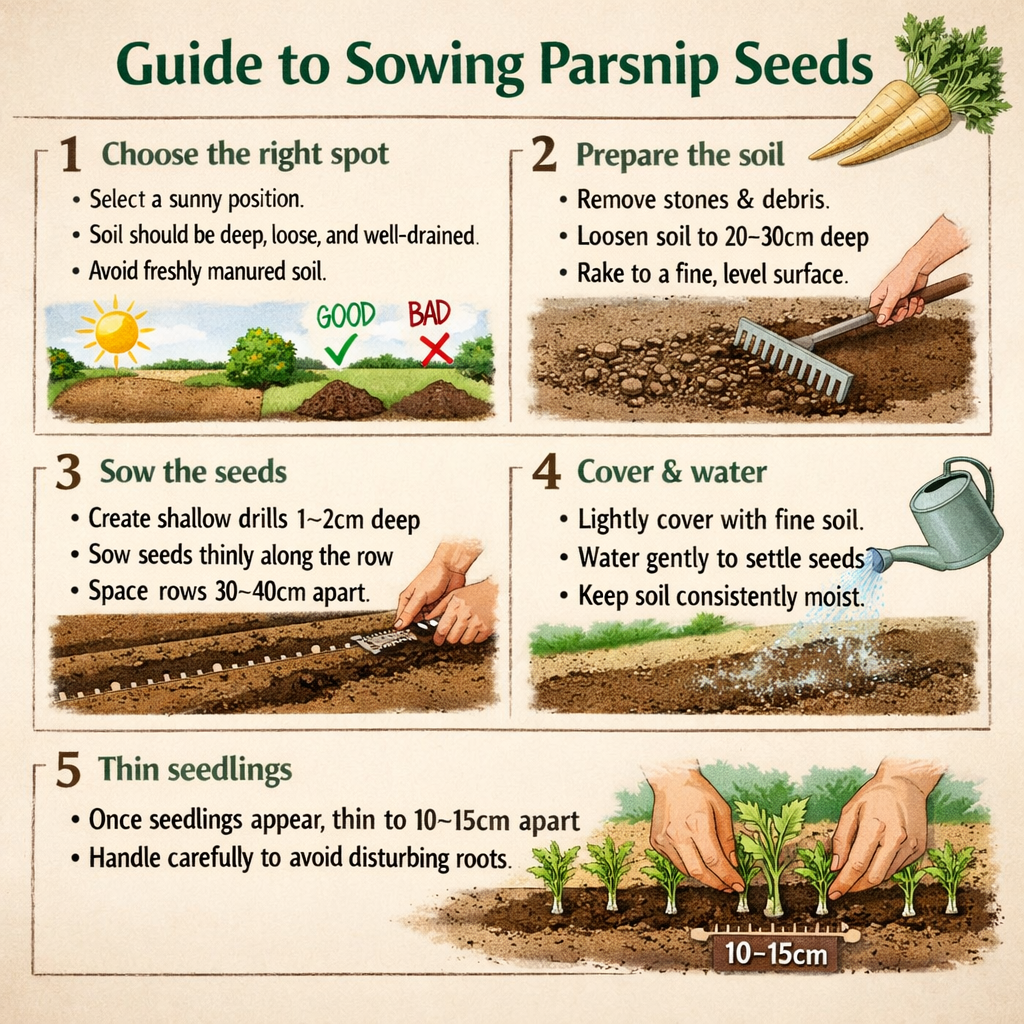
Step-by-step guide to sowing parsnip seeds
Step 1: Choose the right spot
- Select a sunny position
- Soil should be deep, loose, and well-drained
- Avoid freshly manured soil (can cause forked roots)
Step 2: Prepare the soil
- Remove stones and debris
- Loosen soil to at least 20–30cm depth
- Rake to a fine, level surface
Step 3: Sow the seeds
- Create shallow drills around 1–2cm deep
- Sow seeds thinly along the row
- Space rows 30–40cm apart
Step 4: Cover and water
- Lightly cover with fine soil
- Water gently to settle seeds
- Keep soil consistently moist
Step 5: Thin seedlings
- Once seedlings appear, thin to 10–15cm apart
- Handle carefully to avoid disturbing roots
When to sow parsnip seeds
Parsnips are best sown:
- From March onwards
- Once soil is workable and beginning to warm
- Not in cold, waterlogged conditions
Seeds can take 2–3 weeks (or longer) to germinate, especially in cooler soil.
Best parsnip varieties
- Tender and True
- Reliable and widely grown
- Good flavour and shape
- Gladiator
- Strong germination
- Resistant to canker
- Albion
- Smooth roots
- Good disease resistance
Choose fresh seed each year, as parsnip seeds lose viability quickly.
Ideal growing conditions
- Light
- Full sun preferred
- Soil
- Deep, stone-free, well-drained
- Avoid heavy or compacted soil
- Water
- Keep soil consistently moist during germination
- Water more during dry periods
- Feeding
- Minimal feeding required
- Avoid high nitrogen fertilisers
Common problems
Poor germination
- Cause: old seed or cold soil
- Fix: use fresh seed and wait for better conditions
Forked roots
- Cause: stony or compacted soil
- Fix: improve soil structure before sowing
Canker
- Cause: soil issues or inconsistent growth
- Fix: grow resistant varieties and maintain steady growth
Weed competition
- Cause: slow germination
- Fix: keep rows weed-free early on
Climate and regional notes
UK & Ireland
- March is the main sowing window
- Later sowings possible into April
Europe
- Northern regions follow similar timing
- Southern regions may sow earlier
USA
- Sow as soon as soil can be worked in spring
- Timing varies by region and frost dates
Pro tips for better results
- Mix parsnip seed with radish seed to mark rows (radishes grow faster)
- Water rows before sowing if soil is dry
- Sow a second batch a few weeks later for succession
- Avoid transplanting — always direct sow
- Leave roots in the ground after frost to improve sweetness
FAQs: sowing parsnips
When should I sow parsnip seeds
From March onwards, once soil is workable and beginning to warm.
Why are my parsnips not germinating
Often due to old seed or cold soil. Parsnip seeds lose viability quickly.
How deep should I sow parsnip seeds
Around 1–2cm deep in shallow drills.
Do parsnips need full sun
Yes, they grow best in full sun.
Can I grow parsnips in containers
Only in very deep containers, as they need space for long roots.
How long do parsnips take to grow
Typically 4–6 months from sowing to harvest.
Why are my parsnips forked
Usually due to stones or compacted soil.
Do I need to thin parsnips
Yes, thin seedlings to 10–15cm apart for proper root development.
Can I transplant parsnips
No, they do not transplant well and should be sown directly.
Do parsnips taste better after frost
Yes, frost improves sweetness by converting starches to sugars.