How to know when propagated plants are ready for potting on
Knowing when to pot on propagated plants is key to keeping them growing strong. Move them too early and roots may be weak, too late and they can become root-bound or stressed.
The goal is to transplant when roots are established but still actively growing.
Quick answer: when to pot on propagated plants
Propagated plants are ready for potting on when they have developed a healthy root system, show new top growth, and can hold together when gently removed from their container.
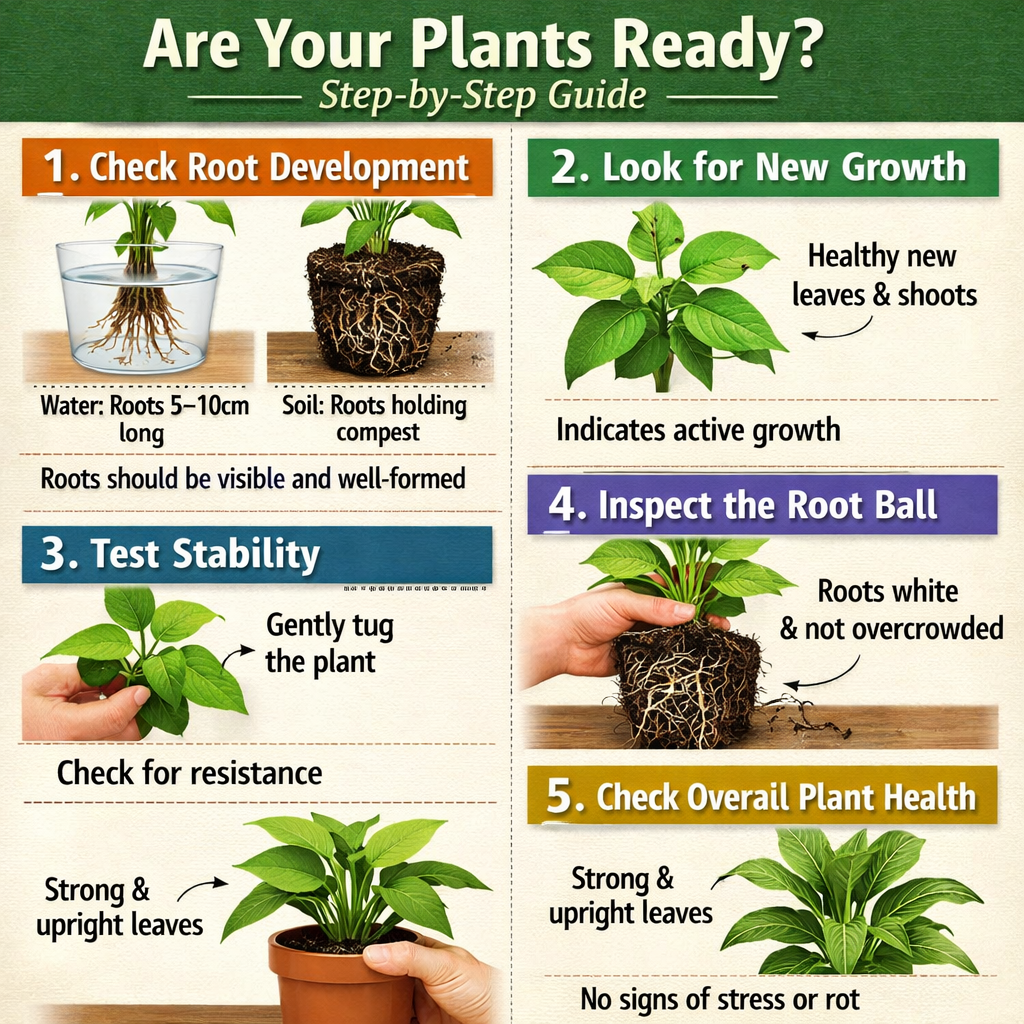
Step-by-step guide to checking if plants are ready
Step 1: Check root development
- Roots should be visible and well-formed
- For water propagation: roots around 5–10cm long
- For soil: roots should hold compost together
Step 2: Look for new growth
- Healthy new leaves or shoots appearing
- Indicates the plant is actively growing
- Strong sign roots are established
Step 3: Test stability
- Gently tug the plant
- Resistance means roots are anchoring
- Loose plants need more time
Step 4: Inspect the root ball
- Carefully remove from pot
- Roots should be white and healthy
- Not tightly circling or overcrowded
Step 5: Check overall plant health
- Leaves should look strong and upright
- No signs of stress or rot
- Growth should be steady
When propagated plants are ready
Most plants are ready to pot on:
- 1–4 weeks after propagation (cuttings)
- Once roots are clearly established
- When growth becomes more vigorous
Timing varies depending on plant type and conditions.
Signs plants are not ready yet
- No visible root growth
- Cuttings easily pull out of soil
- Leaves are wilting or weak
- Slow or no new growth
In these cases, allow more time before moving.
Best containers for potting on
- Small pots with drainage
- Slightly larger than current root system
- Use fresh, suitable compost
Avoid moving plants into pots that are too large too soon.
Ideal conditions after potting on
- Light
- Bright, indirect light initially
- Water
- Keep soil evenly moist
- Avoid overwatering
- Temperature
- Warm and stable
- Feeding
- Start light feeding once established
Gentle conditions help plants settle after transplanting.
Common problems
Transplant shock
- Cause: moving too early
- Fix: wait for stronger roots
Root damage
- Cause: rough handling
- Fix: handle carefully during transplant
Overpotting
- Cause: pot too large
- Fix: use appropriately sized containers
Slow growth after potting
- Cause: stress or poor conditions
- Fix: stabilise environment
Climate and regional notes
UK & Ireland
- Indoor propagation often means slower root development
- Allow extra time before potting on
Europe
- Northern regions may see slower progress
- Southern regions often faster
USA
- Varies by climate
- Warmer conditions speed up rooting
Pro tips for better results
- Always check roots before potting on
- Pot on gradually in stages
- Avoid disturbing roots too much
- Water after transplanting
- Keep conditions stable after moving
FAQs: potting on propagated plants
How do I know when cuttings are ready to pot on
When roots are well developed and new growth appears.
How long should roots be before potting on
Around 5–10cm for water-propagated plants.
Can I pot on too early
Yes, this can cause transplant shock and slow growth.
What happens if I wait too long
Plants can become root-bound and stressed.
What size pot should I use next
Only slightly larger than the current root system.
Should I water after potting on
Yes, to help settle the soil.
Do I need to feed immediately after potting on
No, wait until the plant is established.
Why is my plant not growing after potting on
Often due to stress or unsuitable conditions.
Can I pot multiple cuttings together
Yes, to create fuller plants.
Is potting on necessary
Yes, to allow continued growth and root expansion.