
How to grow bedding plants from seed
Growing bedding plants from seed is one of the cheapest and most effective ways to fill a garden with colour. It also gives you far more variety than buying plugs.
The key difference with bedding plants? Many have very fine, dust-like seeds and need a lighter touch than most vegetables.
Quick answer: how to grow bedding plants from seed
Sow seeds on the surface of fine compost, keep them warm and evenly moist, and provide strong light as soon as they germinate. Many bedding plants need light to germinate, so avoid burying them.
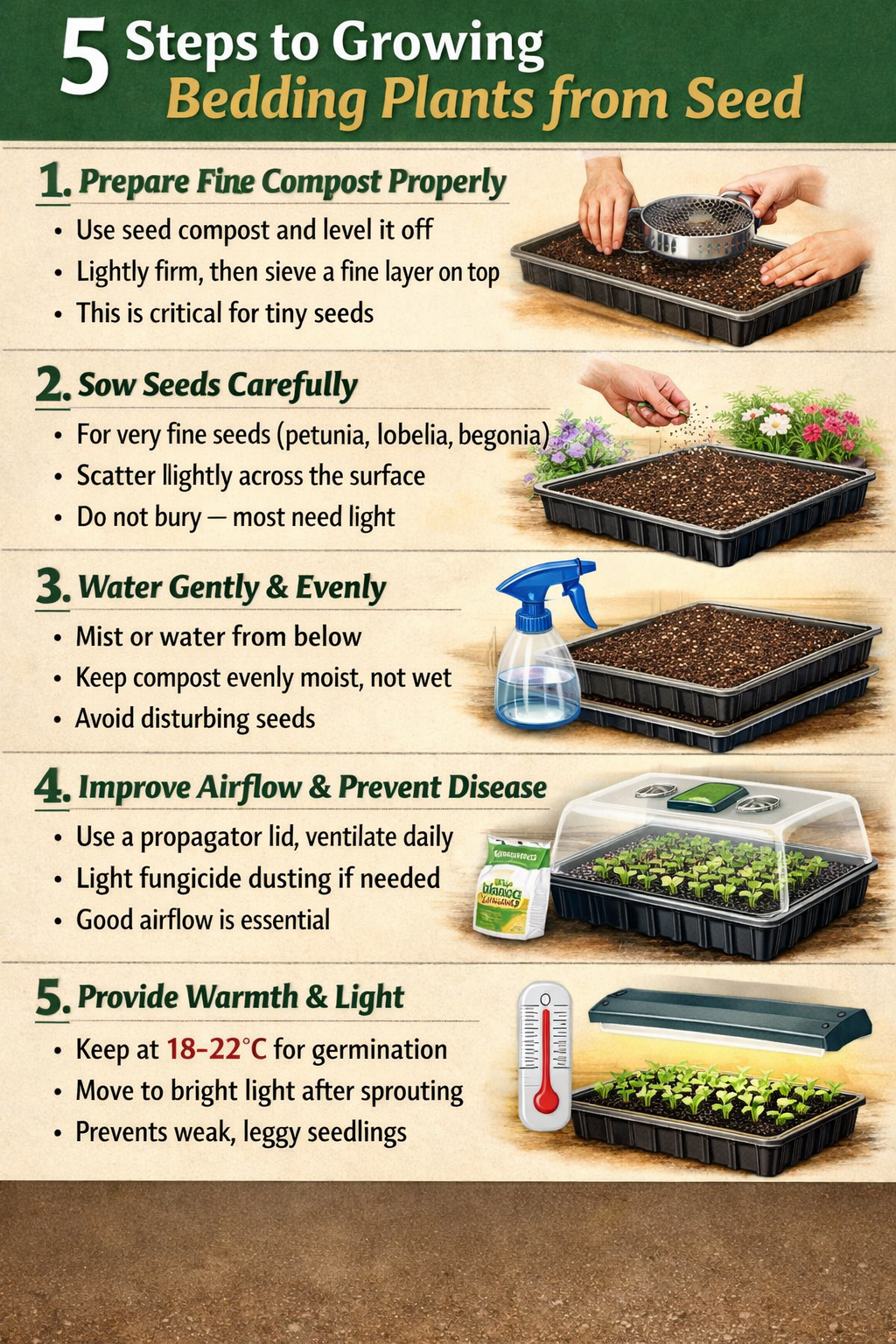
5 step guide to growing bedding plants from seed
Step 1: Prepare fine compost properly
- Use seed compost and level it off
- Lightly firm, then sieve a fine layer on top
- This is critical for tiny seeds
Step 2: Sow seeds carefully
- For very fine seeds (petunia, lobelia, begonia), use broadcast sowing
- Scatter lightly across the surface
- Do not bury — most need light
Step 3: Water gently and evenly
- Mist or water from below
- Keep compost evenly moist, not wet
- Avoid disturbing seeds
Step 4: Improve airflow and prevent disease
- Use a propagator lid, but ventilate daily
- Consider a light fungicide dusting if damping off is a risk
- Good airflow is essential
Step 5: Provide warmth and light
- Keep at 18–22°C for germination
- Move to bright light immediately after sprouting
- This prevents weak, leggy seedlings
Best varieties & why
- Antirrhinum (snapdragon)
- Easy and reliable
- Great for early colour
- Begonia
- Very fine, dust-like seeds
- Needs careful sowing but rewarding
- Dahlia (from seed)
- Fast-growing and varied
- Great for seasonal colour
- Petunia
- Needs surface sowing
- Long flowering period
- Lobelia
- Extremely fine seed
- Best sown in clusters
- Nemesia
- Quick to germinate
- Ideal for containers
- Zinnia
- Larger seeds, very easy
- Fast results and beginner-friendly
Start with zinnia or antirrhinum if you want quick wins. Petunia and begonia need more precision.
Common issues, pests & diseases
Seeds not germinating
- Cause: buried too deep or low temperature
- Fix: surface sow and increase warmth
Damping off
- Cause: excess moisture and poor airflow
- Fix: ventilate and water less
- If you’re losing seedlings suddenly, read this → https://www.theonlinegardencenter.com/how-to-garden/how-to-prevent-damping-off-in-seedlings
Mould on soil
- Cause: overwatering
- Fix: improve airflow and reduce watering
- If you’re seeing white fuzz, click here: https://www.theonlinegardencenter.com/how-to-garden/why-mould-appears-during-seed-germination
Leggy seedlings
- Cause: lack of light
- Fix: move to brighter conditions immediately
- If this keeps happening, click here: https://www.theonlinegardencenter.com/how-to-garden/why-are-my-seedlings-leggy
Best fertiliser, soil, lighting & growing conditions
- Light
- Bright light immediately after germination
- Soil
- Fine, seed-specific compost
- Top layer sieved for small seeds
- Water
- Even moisture, never waterlogged
- Feeding
- Start light feeding once established
- Airflow
- Essential to prevent disease
Fine seeds + heavy soil + too much water = failure. Keep it light and controlled.
Time of year
- Sow in late winter to early spring indoors
- Start earlier for longer flowering season
- Most bedding plants are ready to plant out after last frost
Climate and regional notes
UK & Ireland
- Indoor sowing almost essential early on
- Light levels can limit growth — positioning matters
Europe
- Northern regions follow similar approach
- Southern regions can sow earlier and outdoors sooner
USA
- Start indoors before last frost
- Warmer regions allow earlier sowing
Pro tips for better success
- Mix fine seeds with sand for easier sowing
- Label everything — seedlings look identical early on
- Don’t overwater — most failures come from this
- Sow little and often instead of all at once
- Be patient with slow germinators like begonia
10 frequently asked questions about growing bedding plants from seed
Do bedding plant seeds need light to germinate
Many do — especially petunia, lobelia, and begonia.
What is broadcast sowing
Scattering seeds evenly across the surface rather than planting individually.
Why are my seeds not growing
Usually due to being buried too deep or incorrect temperature.
How do I water tiny seeds
Mist lightly or water from below to avoid disturbance.
Do I need a propagator
Not essential, but it improves success rates.
Why are my seedlings dying suddenly
Likely damping off — improve airflow and reduce watering.
Click here: https://www.theonlinegardencenter.com/how-to-garden/how-to-prevent-damping-off-in-seedlings
Can I sow bedding plants directly outdoors
Some, like zinnia, yes — others need indoor start.
What temperature is best for germination
Around 18–22°C for most varieties.
When should I prick out seedlings
Once they have true leaves and are large enough to handle.
Are bedding plants easy to grow from seed
Yes — if you get light, moisture, and sowing depth right.
Related guides
- Getting watering right is critical — read this before you start: https://www.theonlinegardencenter.com/how-to-garden/how-often-to-water-seeds-during-germination
- Your soil mix will make or break success — click here: https://www.theonlinegardencenter.com/how-to-garden/best-soil-mix-for-seed-germination
- If your seedlings are weak, fix this first: https://www.theonlinegardencenter.com/how-to-garden/why-are-my-seedlings-leggy