Common pests that affect your seedlings
Young seedlings are soft, tender, and easy targets. If something’s going to attack your plants, it’ll happen early.
The good news — most pests are easy to spot and control if you catch them quickly.
Quick answer: common seedling pests
The most common pests are aphids, sciarid flies (fungus gnats), red spider mites, vine weevils, glasshouse pests, and slugs/snails. Most problems are linked to moisture, airflow, and environment.
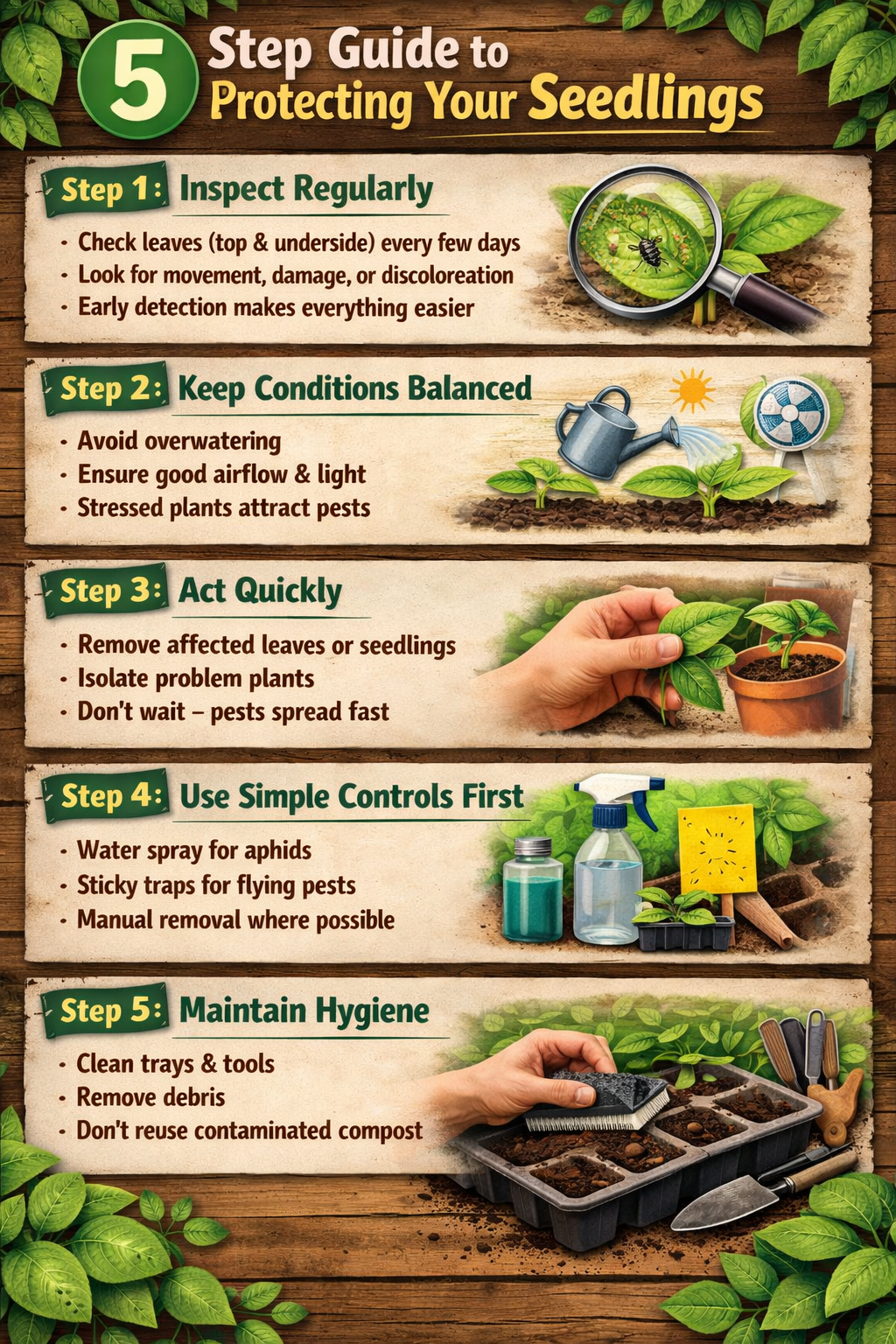
5 step guide to protecting your seedlings
Step 1: Inspect regularly
- Check leaves (top and underside) every few days
- Look for movement, damage, or discolouration
- Early detection makes everything easier
Step 2: Keep conditions balanced
- Avoid overwatering
- Ensure good airflow and light
- Stressed plants attract pests
Step 3: Act quickly
- Remove affected leaves or seedlings
- Isolate problem plants
- Don’t wait — pests spread fast
Step 4: Use simple controls first
- Water spray for aphids
- Sticky traps for flying pests
- Manual removal where possible
Step 5: Maintain hygiene
- Clean trays and tools
- Remove debris
- Don’t reuse contaminated compost
Common pests, what they do, and how to fix them
Aphids
- Cluster on new growth
- Cause curling and sticky residue
→ Fix: rinse off with water or use insecticidal soap
Sciarid flies (fungus gnats)
- Small flies around soil
- Larvae damage roots
→ Fix: reduce watering and improve drainage
→ If your soil is staying too wet, fix this first: https://www.theonlinegardencenter.com/how-to-garden/how-often-to-water-seeds-during-germination
Red spider mites
- Tiny, hard to see
- Fine webbing and speckled leaves
→ Fix: increase humidity and treat early
Vine weevils
- Larvae eat roots
- Sudden plant collapse
→ Fix: check roots and use biological controls
Glasshouse pests (whitefly, etc.)
- Flying insects in warm environments
- Weaken plants over time
→ Fix: improve airflow and use sticky traps
Slugs and snails
- Chew through seedlings overnight
→ Fix: barriers, hand removal, or traps
Best varieties & why (more resistant options)
- Hardy annuals (zinnia, nasturtium)
- Grow quickly and recover well
- Strong perennials (lavender, coreopsis)
- Less attractive to pests
- Herbs (mint, thyme)
- Naturally more resistant
Soft, lush seedlings are always more vulnerable.
Common issues, pests & diseases
Seedlings collapsing overnight
- Likely slugs, snails, or vine weevil larvae
Sticky leaves
- Aphids or whitefly
Weak growth and root damage
- Sciarid fly larvae
Mottled or speckled leaves
- Red spider mites
If pests keep appearing, it’s usually a conditions problem, not just bad luck.
Best fertiliser, soil, lighting & growing conditions
- Light
- Strong light = stronger, less vulnerable plants
- Soil
- Free-draining compost
- Avoid constantly wet conditions
- Water
- Even moisture, not waterlogged
- Feeding
- Light feeding only once established
Healthy seedlings are far less attractive to pests.
Time of year
- Most issues appear in spring during early growth
- Indoor seedlings are more vulnerable early on
- Slugs/snails become active as temperatures rise
Climate and regional notes
UK & Ireland
- Slugs and sciarid flies are the biggest issues
- Damp conditions increase risk
Europe
- Northern regions similar to UK
- Southern regions more prone to mites
USA
- Indoor pests common in early season
- Outdoor pests vary by region
Pro tips for prevention
- Don’t overwater — it solves half your problems
- Give seedlings space and airflow
- Use fresh compost
- Rotate trays and check daily
- Catch problems early — it’s much easier
10 frequently asked questions about seedling pests
What are the most common pests on seedlings
Aphids, fungus gnats, mites, and slugs.
Why are my seedlings being eaten overnight
Usually slugs or snails.
How do I stop fungus gnats
Reduce watering and improve drainage.
Are aphids dangerous to seedlings
Yes, they can weaken and distort growth.
Can seedlings recover from pest damage
Often yes, if caught early.
Do pests come from compost
Sometimes, especially if reused or poor quality.
How do I prevent pests indoors
Good airflow, hygiene, and careful watering.
Are chemical treatments necessary
Usually not — simple methods work early on.
Why do pests keep coming back
Conditions (especially moisture) are encouraging them.
What is the best defence against pests
Healthy, well-grown seedlings.
Related guides
- If your soil is too wet, pests will follow — fix it here: https://www.theonlinegardencenter.com/how-to-garden/how-often-to-water-seeds-during-germination
- Weak seedlings attract problems — improve them here: https://www.theonlinegardencenter.com/how-to-garden/why-are-my-seedlings-leggy
- If seedlings are dying suddenly, it may not be pests — check this: https://www.theonlinegardencenter.com/how-to-garden/how-to-prevent-damping-off-in-seedlings