Why Did My Seeds Not Germinate?
Intro
Few things are more frustrating than planting seeds, waiting patiently… and seeing nothing. No shoots, no green, just bare soil. The good news: seed failure is usually predictable—and fixable once you understand what went wrong.
Quick Answer
Seeds usually fail to germinate due to incorrect moisture, temperature, planting depth, poor soil, or old/non-viable seeds. Fix those five factors, and germination success improves dramatically.
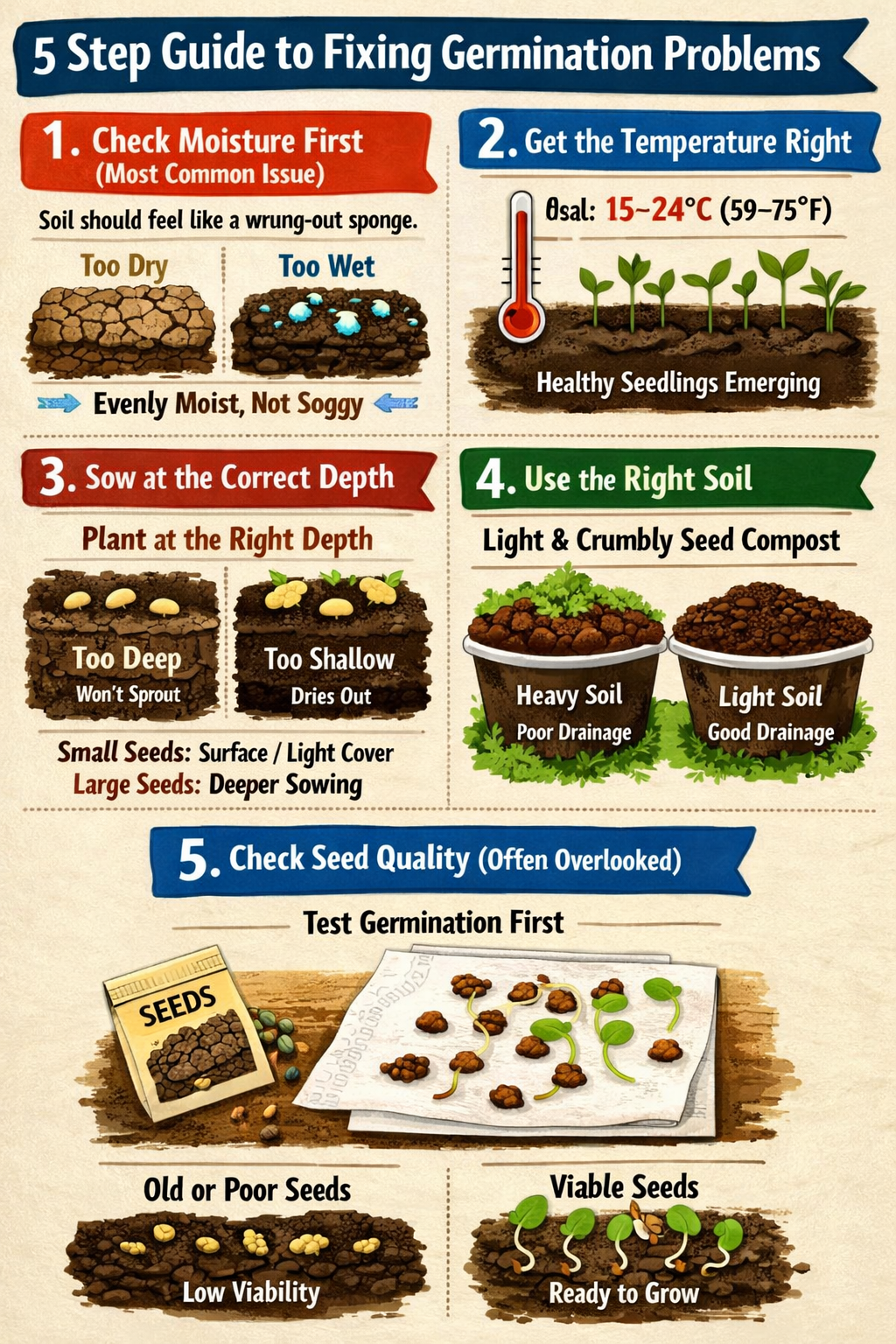
5 Step Guide to Fixing Germination Problems
1. Check Moisture First (Most Common Issue)
Seeds need consistent moisture—not wet, not dry.
- Soil drying out stops germination completely
- Overwatering causes rot and fungal issues
- Aim for evenly moist, never soggy
Checkpoint: Soil should feel like a wrung-out sponge, not muddy or dusty.
2. Get the Temperature Right
Cold soil slows or prevents germination.
- Most seeds need 15–24°C
- Fluctuating temperatures delay sprouting
- Warm indoor spaces or propagators improve results
Visual outcome: When temperature is right, seedlings appear quickly and evenly.
3. Sow at the Correct Depth
Planting depth matters more than most beginners expect.
- Too deep → seedlings can’t reach the surface
- Too shallow → seeds dry out or fail to anchor
- Some seeds need light, others need covering
Rule: Small seeds = surface or light cover. Larger seeds = deeper sowing.
4. Use the Right Soil
Heavy soil is a silent killer of germination.
- Compacted soil blocks oxygen and root growth
- Poor drainage leads to rot
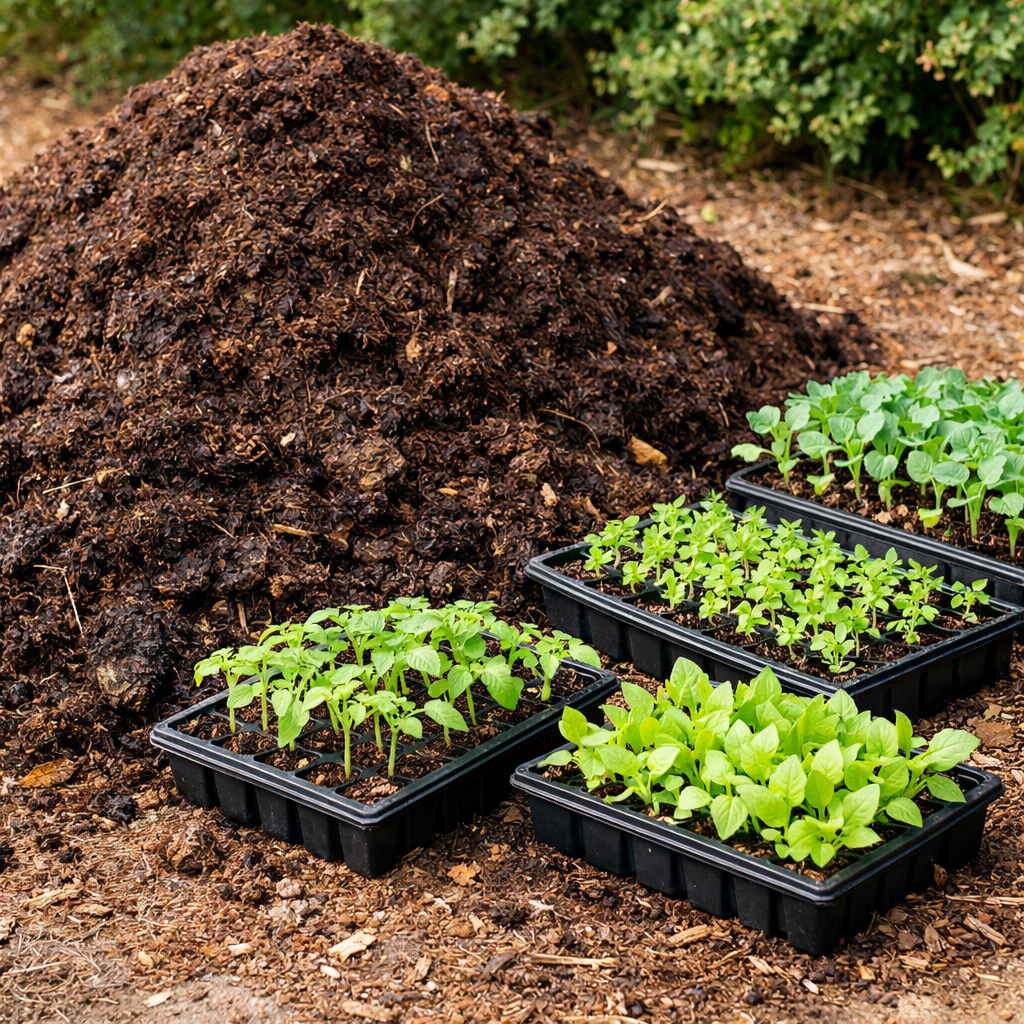
- Use fine, free-draining seed compost
Result: Healthy germination starts with light, crumbly soil.
5. Check Seed Quality (Often Overlooked)
Sometimes the problem isn’t you—it’s the seed.
- Old seeds lose viability over time
- Poor storage reduces germination rates
- Some seeds require soaking, scarification, or cold treatment
Quick test: Try a paper towel germination test before sowing large batches.
Best Varieties & Why
Some seeds are naturally easier for beginners:
- Marigolds – fast, reliable, forgiving
- Lettuce – quick germination in cool conditions
- Radish – sprouts in days, very visible progress
These give you fast feedback, which builds confidence early.
Common Issues (And What They Look Like)
- Nothing at all → Often temperature or dead seeds
- Patchy germination → Inconsistent watering
- Seeds disappeared → Too deep or eaten by pests
- Mould on soil → Overwatering + poor airflow
- Seeds swell but don’t sprout → Too cold or lacking oxygen
Growing Conditions (Including Pruning)
While pruning isn’t relevant yet, early conditions matter:
- Light: Not always needed for germination, but essential immediately after
- Airflow: Prevents mould and fungal problems
- Watering method: Bottom watering or misting is safest
Strong starts prevent weak plants later—it’s where most gardening success begins.
Time of Year
Timing directly affects germination success.
- Early spring: often too cold without protection
- Late spring: ideal for most seeds
- Indoors: allows earlier and more controlled sowing
Mistake to avoid: Starting too early without warmth—this leads to failure more than delay.
Plant Characteristics (Seed Stage)
At germination, all seeds need:
- Moisture to activate growth
- Oxygen for root development
- Stable warmth to trigger sprouting
If one is missing, germination stalls completely.
Climate and Regional Notes
UK & Ireland
- Cooler temperatures slow germination
- Indoor sowing is often necessary early in the season
Europe
- Northern regions mirror UK conditions
- Southern regions allow earlier outdoor sowing
USA
- Wide variation:
- Northern states need indoor starts
- Warmer zones can sow earlier outdoors
Pro Tips
- Label trays with sowing dates (prevents guessing)
- Use a propagator lid to lock in warmth and moisture
- Check soil daily—don’t water blindly
- Start with fresh seeds every season
- Sow slightly more seeds than needed (insurance)
FAQ
Why are my seeds not germinating even after 2 weeks?
Likely temperature is too low or seeds are old. Most seeds germinate faster in warm, stable conditions.
Can seeds start germinating and then stop?
Yes—if soil dries out mid-process, germination can fail completely.
Do seeds need light to germinate?
Some do, but many prefer darkness. Check the specific seed type before sowing.
How wet should soil be during germination?
Lightly moist at all times—not wet. Overwatering is just as damaging as drying out.
Can I fix seeds that haven’t germinated?
Sometimes. Increase warmth, check moisture, and wait a few more days before re-sowing.
How do I know if seeds are dead?
Try a germination test (paper towel method). No sprouting = low viability.
Should I cover seeds with plastic or a lid?
Yes, this helps retain moisture and warmth—but remove once seedlings appear.
Why do some seeds germinate and others don’t in the same tray?
Usually uneven watering or inconsistent soil conditions.
Can I reuse old compost for seeds?
Not recommended—it may be compacted, nutrient-depleted, or contain disease.
Do bigger seeds germinate more easily?
Often yes—they have more stored energy, making them more forgiving.
Related Guides
- For a full seed-to-seedling breakdown → click here
- To fix watering mistakes early → click here
- To improve your soil for better success → click here
Closing
When seeds don’t germinate, it’s rarely random. It’s usually one of a few controllable factors—moisture, temperature, depth, soil, or seed quality.
Dial those in, and you’ll go from empty trays to fast, even germination—and that’s where confident gardening really begins.