
What is Bolting in Plants
Bolting is when a plant suddenly produces a flower stem and begins to set seed earlier than expected. This usually happens in leafy or root crops and often results in reduced quality, poor flavour, or unusable harvests.
It’s a natural survival response triggered by environmental stress.
Quick answer: what is bolting
Bolting is when a plant shifts from leaf or root growth into flowering and seed production prematurely, usually caused by stress such as temperature changes, dry conditions, or long daylight hours.
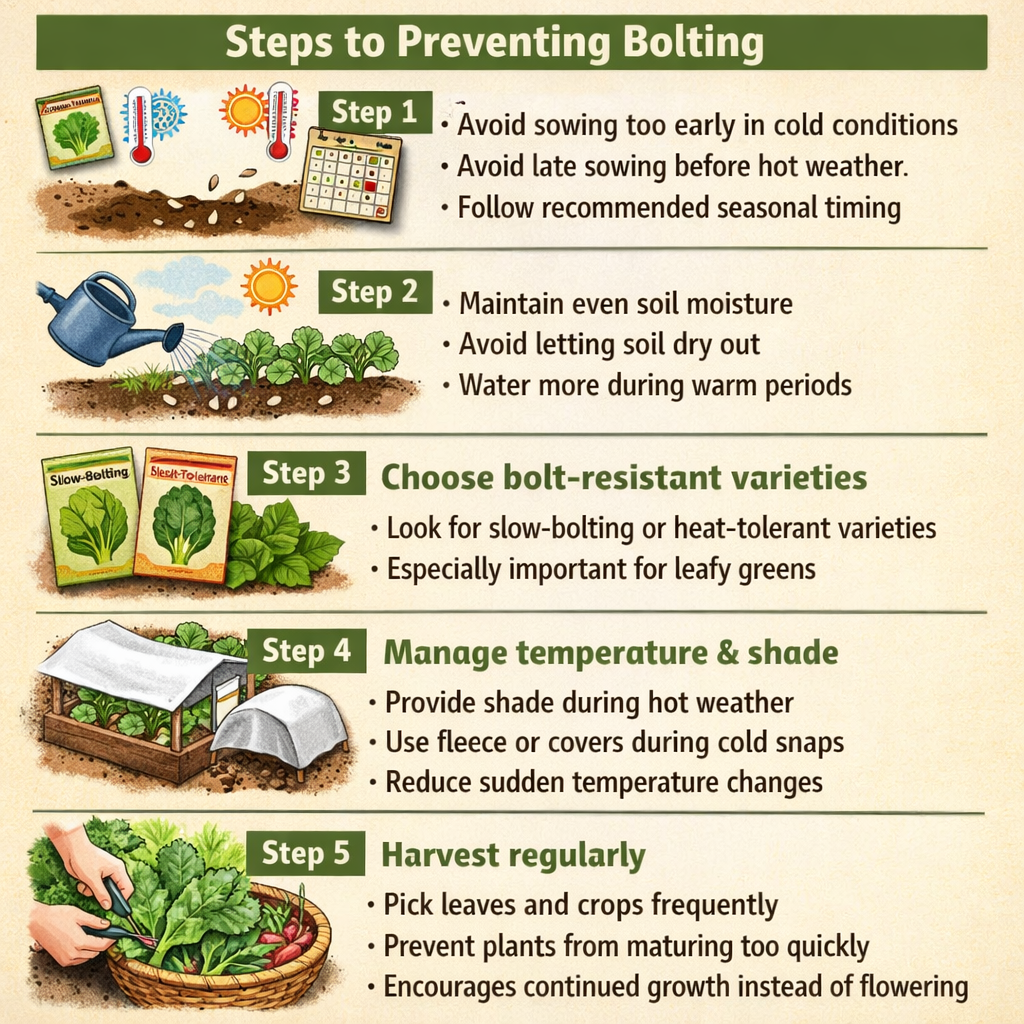
Step-by-step guide to preventing bolting
Step 1: Sow at the right time
- Avoid sowing too early in cold conditions
- Avoid late sowing before hot weather
- Follow recommended seasonal timing
Step 2: Keep watering consistent
- Maintain even soil moisture
- Avoid letting soil dry out
- Water more during warm periods
Step 3: Choose bolt-resistant varieties
- Look for slow-bolting or heat-tolerant varieties
- Especially important for leafy greens
Step 4: Manage temperature and shade
- Provide shade during hot weather
- Use fleece or cover during cold snaps
- Reduce sudden temperature changes
Step 5: Harvest regularly
- Pick leaves and crops frequently
- Prevent plants from maturing too quickly
- Encourages continued growth instead of flowering
When bolting is most likely to occur
Bolting is most common when plants are under stress, particularly:
- Sudden temperature changes
- Prolonged cold followed by warmth
- Long daylight hours
- Dry or inconsistent watering
Fast-growing crops are especially prone.
Plants most likely to bolt
- Leafy greens
- Lettuce
- Spinach
- Rocket
- Root crops
- Carrots
- Parsnips
- Beetroot
- Herbs
- Basil
- Coriander
These crops are grown for leaves or roots, so bolting reduces their usefulness.
Ideal conditions to prevent bolting
- Temperature
- Keep conditions as stable as possible
- Water
- Maintain consistent moisture
- Light
- Provide shade during intense heat
- Timing
- Sow at the correct time
Consistency is the key factor in preventing bolting.
Common causes of bolting
Cold shock
- Early exposure to cold followed by warmth
Heat stress
- High temperatures trigger flowering
Dry conditions
- Inconsistent watering
Poor timing
- Sowing too early or too late
Climate and regional notes
UK & Ireland
- Often triggered by spring temperature swings
- Also occurs during summer heat
Europe
- Northern regions: cold-related bolting
- Southern regions: heat-related bolting
USA
- Varies widely by region
- Heat is a major trigger in warmer climates
Pro tips to reduce bolting
- Sow little and often
- Choose the right varieties
- Keep soil consistently moist
- Use shade during hot periods
- Plan sowing around seasonal conditions
FAQs: bolting in plants
What does bolting mean in gardening
It means a plant has started flowering and producing seeds earlier than expected.
Why do plants bolt
Usually due to stress from temperature, water, or light conditions.
Can you stop bolting once it starts
No, once it begins it cannot be reversed.
Are bolted plants still edible
Sometimes, but they are often bitter or tough.
Which plants bolt the most
Leafy greens like lettuce and spinach are most prone.
Does heat cause bolting
Yes, high temperatures are a major trigger.
Does cold weather cause bolting
Yes, especially when followed by warmth.
How can I prevent bolting
Maintain consistent conditions, water regularly, and choose resistant varieties.
Should I remove bolting plants
Yes, unless you want to collect seeds.
Can bolting be useful
Yes, for seed saving purposes.