Indoor vs Outdoor Seed Starting (Pros & Cons)
Starting seeds is one of the most satisfying parts of gardening—but choosing where to start them can make or break your success. Indoor seed starting gives you control and an early start, while outdoor sowing is simpler and more natural. The right choice depends on your space, climate, and how much effort you want to invest.
Let’s break it down clearly so you can decide with confidence.
Quick Answer
- Indoor seed starting = earlier harvests, better control, higher success for delicate plants
- Outdoor seed starting = less effort, lower cost, better for hardy crops
If you want strong, early crops like tomatoes and peppers → start indoors
If you prefer low-maintenance gardening or hardy veg → sow outdoors
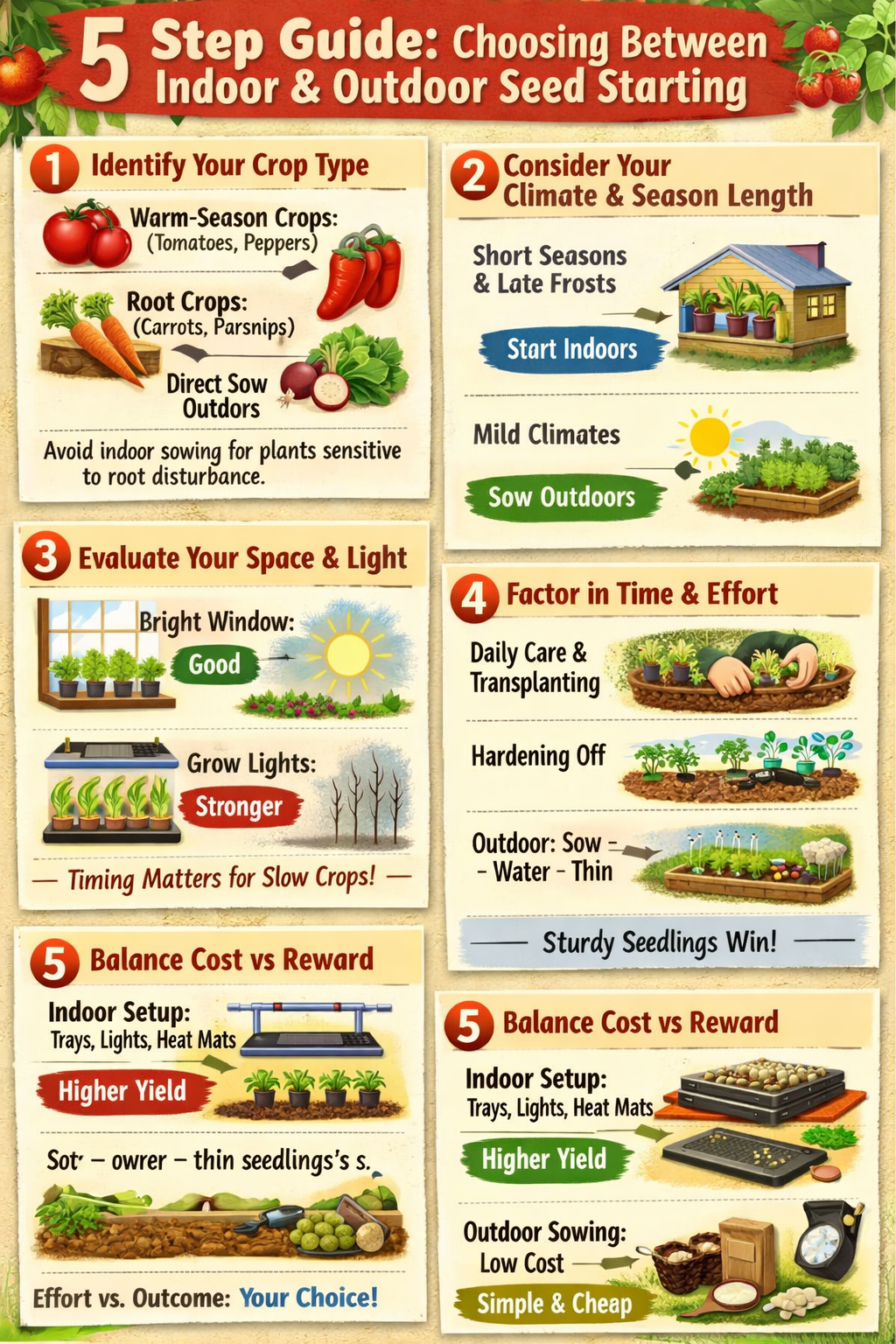
5 Step Guide: Choosing Between Indoor & Outdoor Seed Starting
1. Identify Your Crop Type
Some plants need indoor starting, others perform better outside.
- Warm-season crops (tomatoes, peppers, chillies) → indoors
- Root crops (carrots, parsnips) → direct sow outdoors
- Fast growers (lettuce, radish) → either works
If a plant hates root disturbance, avoid indoor sowing.
2. Consider Your Climate & Season Length
Short growing seasons benefit massively from indoor starts.
- Cool climates → indoor gives a 4–8 week head start
- Mild climates → outdoor sowing is often enough
- Late frosts → indoor protects young seedlings
Starting too late outdoors can mean no harvest at all for slower crops.
3. Evaluate Your Space & Light
Indoor success depends on light quality—not just location.
- Bright windowsills can work (south-facing is best)
- Grow lights = stronger, sturdier seedlings
- Poor light = leggy, weak plants
Strong seedlings are short and sturdy—not tall and floppy.
4. Factor in Time & Effort
Indoor growing is more hands-on than outdoor sowing.
- Daily watering and monitoring
- Transplanting required
- Hardening off before planting outside
Outdoor sowing is simpler:
- Sow → water → thin seedlings
If you want low maintenance, outdoor wins.
5. Balance Cost vs Reward
Indoor setups cost more but can pay off.
- Seed trays, compost, lights, heat mats
- Earlier and often larger harvests
Outdoor sowing:
- Minimal cost
- Slightly lower success rate
More effort = more control. Less effort = more natural but less predictable.
Best Varieties & Why
Best for Indoor Seed Starting
- Tomatoes → need long growing season
- Peppers & chillies → slow germination
- Aubergines → require warmth
- Basil → benefits from early protection
Best for Outdoor Seed Starting
- Carrots → dislike transplanting
- Radishes → fast and reliable
- Spinach → thrives in cool soil
- Peas & beans → germinate easily outdoors
Common Issues
Leggy Seedlings (Indoor)
- Cause: insufficient light
- Fix: move to brighter light or use grow lights
Poor Germination (Outdoor)
- Cause: cold or dry soil
- Fix: wait for warmer conditions and keep soil moist
Transplant Shock (Indoor → Outdoor)
- Cause: skipping hardening off
- Fix: gradually expose plants to outdoor conditions over 7–10 days
Pest Damage (Outdoor)
- Cause: slugs, birds
- Fix: use netting or organic deterrents
Growing Conditions (Including Pruning)
Indoor:
- Use fine seed compost for better germination
- Keep soil moist but not soggy
- Thin seedlings early to avoid overcrowding
Outdoor:
- Prepare soil well—remove clumps and stones
- Water consistently during germination
- Thin seedlings to proper spacing
Pruning isn’t usually required at seedling stage, but:
- Pinch out leggy growth on some herbs to encourage bushiness
- Remove weak seedlings to give stronger ones space
Time of Year
- Indoor sowing: Late winter to early spring (Feb–April)
- Outdoor sowing: Spring to early summer (March–June depending on crop)
Key timing rule:
Start indoors 4–8 weeks before your last frost date.
Plant Characteristics
- Indoor-grown plants are often:
- Taller initially
- More controlled in spacing
- Slightly more sensitive during transplant
- Outdoor-grown plants are:
- Hardier from the start
- Better adapted to local conditions
- Slightly slower to establish
Climate Notes
In cooler climates (like Ireland & the UK):
- Indoor seed starting significantly improves success rates
- Outdoor sowing works best from mid-spring onward
In warmer regions:
- Outdoor sowing is often sufficient for most crops
- Indoor starting mainly used for early harvests
Pro Tips
- Use a fan indoors to strengthen seedlings (simulates wind)
- Label everything—seedlings look identical early on
- Don’t rush outdoor sowing—cold soil delays growth more than waiting does
- Harden off plants gradually to avoid shock
- Sow little and often for continuous harvests
FAQ
Is indoor seed starting worth it?
Yes—especially for long-season crops. It gives you earlier and more reliable harvests.
Can I start everything outdoors?
Not effectively. Warm-season crops will struggle or fail in cooler climates.
Do I need grow lights?
Not always—but they greatly improve seedling quality if natural light is limited.
What is hardening off?
Gradually introducing indoor plants to outdoor conditions over 7–10 days.
Which method is best for beginners?
Outdoor sowing is simpler—but indoor gives better results for many popular crops.
Related Guides
→ click here: https://www.theonlinegardencenter.com/how-to-garden/how-to-start-seeds-indoors/
→ click here: https://www.theonlinegardencenter.com/how-to-garden/direct-sowing-seeds-outdoors/
→ click here: https://www.theonlinegardencenter.com/how-to-garden/how-to-harden-off-seedlings/
Closing
There’s no single “best” method—just the one that fits your goals.
If you want maximum control and earlier harvests, indoor seed starting is hard to beat. If you prefer simplicity and a more natural approach, outdoor sowing will serve you well.
Most experienced gardeners use a mix of both—and that’s often where the real success lies.