How to propagate Pothos in water vs soil
Pothos is one of the easiest houseplants to propagate, making it ideal for beginners. Whether you choose water or soil, both methods are simple and highly successful when done correctly.
The main difference comes down to speed, convenience, and how the roots develop.
Quick answer: water vs soil propagation
Pothos can be propagated in both water and soil. Water propagation is easier and lets you see roots forming, while soil propagation produces stronger, more established roots from the start.
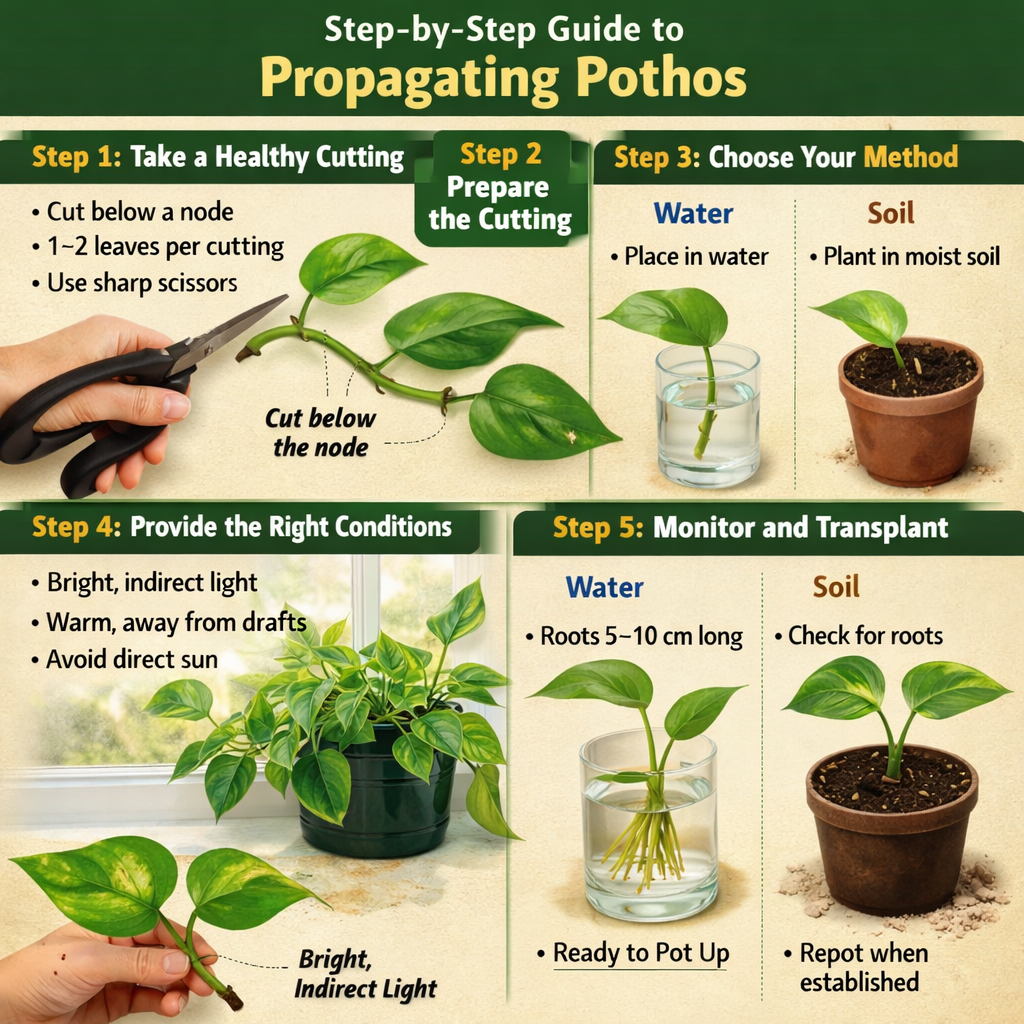
Step-by-step guide to propagating pothos
Step 1: Take a healthy cutting
- Cut a vine just below a node (where leaves and roots form)
- Ensure each cutting has at least 1–2 leaves
- Use clean, sharp scissors
Step 2: Prepare the cutting
- Remove the lower leaf to expose the node
- This is where roots will develop
- Keep the cutting fresh
Step 3: Choose your method (water or soil)
- Water: place the node in water
- Soil: insert the node into moist compost
- Ensure the node is always covered
Step 4: Provide the right conditions
- Place in bright, indirect light
- Keep warm and away from drafts
- Avoid direct sunlight
Step 5: Monitor and transplant
- Water method: transplant once roots are 5–10cm long
- Soil method: check for resistance (root development)
- Pot on into a larger container once established
Water vs soil propagation (key differences)
Water propagation
- Easy and beginner-friendly
- Roots are visible
- Faster initial rooting
- Requires transplanting later
Soil propagation
- Roots adapt to soil immediately
- Less transplant shock
- Slightly harder to monitor progress
- Requires more attention to moisture
Both methods are effective, so it comes down to preference.
When to propagate pothos
Pothos can be propagated:
- Any time of year indoors
- Best during active growth (spring and summer)
- Slower during cooler, darker months
Best pothos varieties for propagation
- Golden pothos
- Most common and easiest
- Marble Queen
- Slower growth but very decorative
- Neon pothos
- Bright foliage
- Easy to propagate
- Satin pothos (Scindapsus)
- Slightly different but similar method
All varieties root easily under the right conditions.
Ideal conditions for propagation
- Light
- Bright, indirect light
- Temperature
- Warm indoor conditions
- Water (for water propagation)
- Change water every few days
- Keep node submerged
- Soil (for soil propagation)
- Light, well-draining compost
- Keep evenly moist
Common problems
Cuttings not rooting
- Cause: no node included
- Fix: ensure node is submerged or planted
Rotting cuttings
- Cause: poor water quality or overwatering
- Fix: refresh water or improve drainage
Slow growth
- Cause: low light or cool temperatures
- Fix: move to a brighter, warmer spot
Wilting cuttings
- Cause: low humidity or poor conditions
- Fix: improve environment
Climate and regional notes
UK & Ireland
- Ideal indoor plant year-round
- Growth slows in winter
Europe
- Similar indoor conditions across regions
- Faster growth in warmer climates
USA
- Grows well indoors in all regions
- Can be grown outdoors in warmer zones
Pro tips for better success
- Always include a node when taking cuttings
- Use clear containers for water propagation
- Avoid direct sunlight
- Take multiple cuttings for fuller plants
- Keep conditions stable
FAQs: propagating pothos
Is it better to propagate pothos in water or soil
Both work well. Water is easier to monitor, while soil produces stronger roots.
How long does pothos take to root
Usually 1–3 weeks in good conditions.
Can pothos grow permanently in water
Yes, but it may need nutrients over time.
Where do I cut pothos for propagation
Just below a node.
How long should roots be before transplanting
Around 5–10cm for best results.
Why are my pothos cuttings not rooting
Often due to missing nodes or poor conditions.
Do I need rooting hormone
Not necessary for pothos.
Can I propagate pothos in winter
Yes, but growth may be slower.
How often should I change water
Every few days to keep it fresh.
Can I plant multiple cuttings together
Yes, this creates a fuller plant.