How to fix phosphate deficiency in seedlings
Phosphate (phosphorus) deficiency is less common than nitrogen issues, but when it shows up, it slows everything down — especially root development.
Seedlings may survive it, but they won’t thrive until it’s corrected.
Quick answer: how to fix phosphate deficiency
Use a balanced fertiliser with phosphorus, ensure roots are warm and active, and avoid cold, waterlogged soil. Phosphate issues are often about poor uptake, not just lack of nutrients.
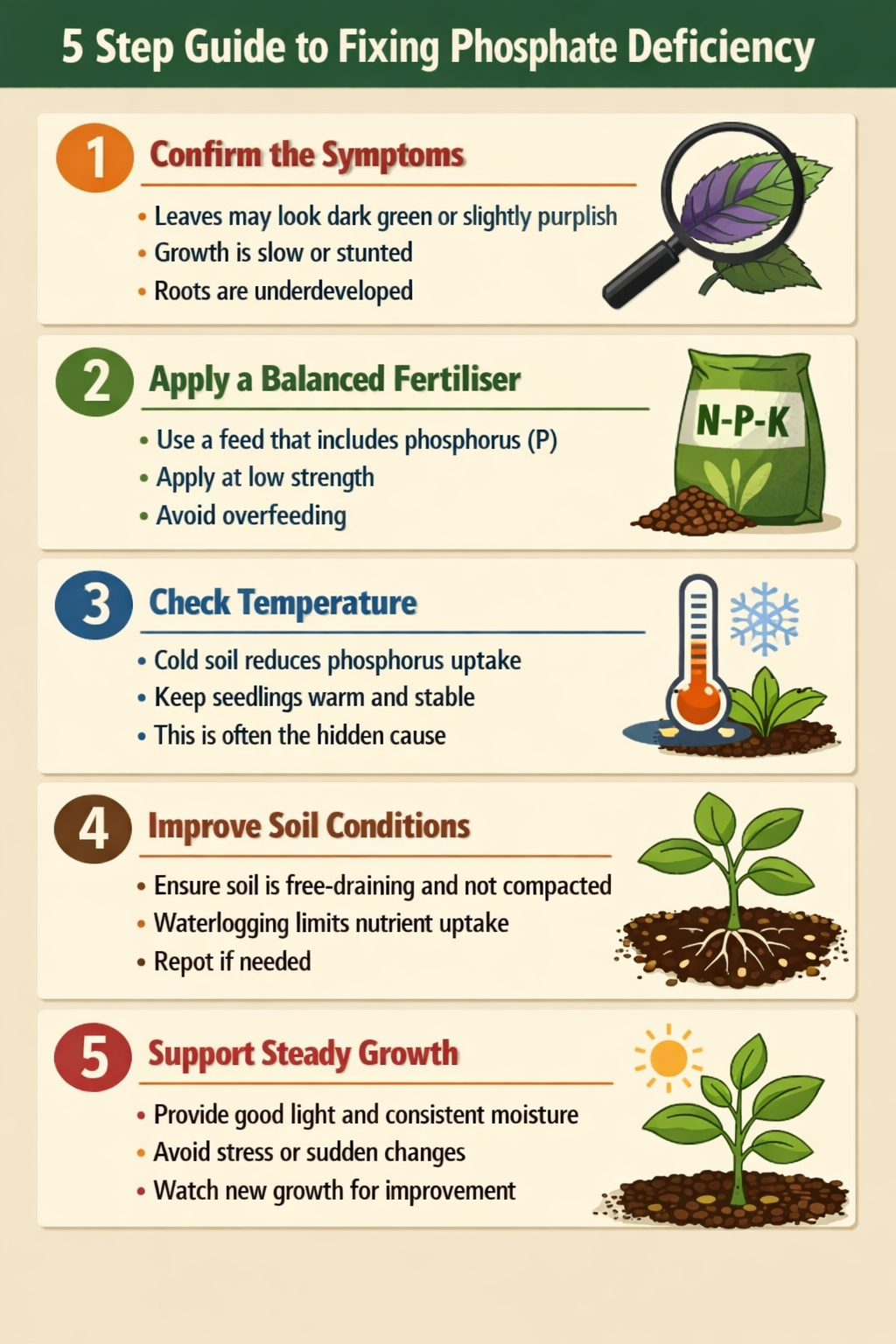
5 step guide to fixing phosphate deficiency
Step 1: Confirm the symptoms
- Leaves may look dark green or slightly purplish
- Growth is slow or stunted
- Roots are underdeveloped
Step 2: Apply a balanced fertiliser
- Use a feed that includes phosphorus (P)
- Apply at low strength
- Avoid overfeeding
Step 3: Check temperature
- Cold soil reduces phosphorus uptake
- Keep seedlings warm and stable
- This is often the hidden cause
Step 4: Improve soil conditions
- Ensure soil is free-draining and not compacted
- Waterlogging limits nutrient uptake
- Repot if needed
Step 5: Support steady growth
- Provide good light and consistent moisture
- Avoid stress or sudden changes
- Watch new growth for improvement
Best fertilisers & why
- Balanced liquid fertiliser
- Contains phosphorus in the right ratio
- Safe and easy to use
- Root-support feeds (starter fertilisers)
- Slightly higher in phosphorus
- Useful for early growth
Balanced feeding is usually enough — no need to overcomplicate it.
Common issues, pests & diseases
Purple leaves but healthy growth
- Some plants naturally show purple tones
- Only act if growth is also slow
No improvement after feeding
- Likely temperature or root issue
- Fix conditions before adding more feed
General yellowing instead
- Likely nitrogen or watering issue
- See: https://www.theonlinegardencenter.com/how-to-garden/why-are-my-plant-leaves-turning-yellow
Best fertiliser, soil, lighting & growing conditions
- Light
- Bright light supports recovery
- Soil
- Free-draining, well-structured compost
- Water
- Even moisture, not waterlogged
- Temperature
- Warm conditions are critical
- Feeding
- Light, balanced feeding
Phosphorus problems are often environmental, not just nutritional.
Time of year
- Most common in early spring
- Soil and compost can still be cold
- Improves naturally as temperatures rise
Climate and regional notes
UK & Ireland
- Cold, damp conditions can limit uptake
- Warmth is often the fix
Europe
- Northern regions see similar issues
- Southern regions less affected
USA
- Cooler states more prone early season
- Warmer climates see fewer problems
Pro tips for better recovery
- Warm the roots — this often solves the issue
- Don’t rush to add more fertiliser
- Focus on overall plant health
- Check drainage before feeding
- Watch new growth, not old leaves
10 frequently asked questions about phosphate deficiency
What does phosphate deficiency look like
Dark or purplish leaves and slow growth.
Why are my seedlings turning purple
Often due to phosphorus uptake issues, especially in cold conditions.
Can seedlings recover
Yes, once conditions improve.
Do I need special fertiliser
Usually a balanced fertiliser is enough.
Can cold soil cause this
Yes, it’s a common cause.
How fast will plants recover
New growth should improve within a couple of weeks.
Should I repot my seedlings
If soil is compacted or poor, it can help.
Is phosphate deficiency common
Less common than nitrogen, but still occurs.
Can overwatering cause this
Yes, it can limit nutrient uptake.
Will purple leaves turn green again
Usually no — focus on new growth.
Related guides
- If you’re unsure about feeding overall, start here: https://www.theonlinegardencenter.com/how-to-garden/how-to-use-fertilizers-with-my-seedlings
- Yellowing leaves can indicate other issues — check this: https://www.theonlinegardencenter.com/how-to-garden/why-are-my-plant-leaves-turning-yellow
- If growth is weak, light may be part of the problem — read this: https://www.theonlinegardencenter.com/how-to-garden/why-are-my-seedlings-leggy