How to fix iron deficiency in seedlings
Iron deficiency shows up quickly in seedlings and can make them look worse than they actually are. The key sign is yellowing in the newest leaves while the veins stay green.
It looks dramatic — but it’s usually straightforward to fix.
Quick answer: how to fix iron deficiency
Use a chelated iron feed or a balanced fertiliser that includes iron, and check your soil conditions. Iron problems are often caused by pH or watering issues, not just lack of nutrients.
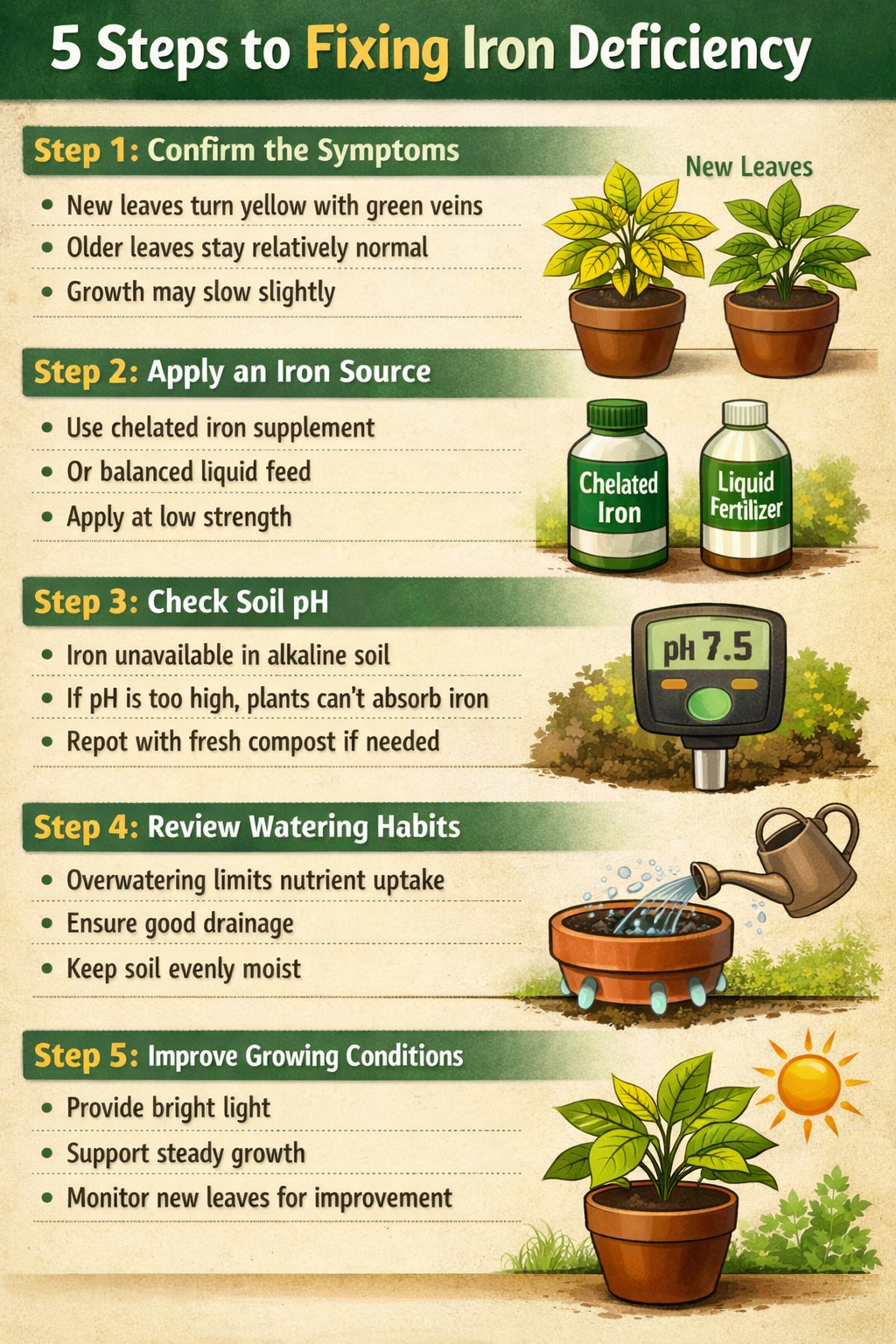
5 step guide to fixing iron deficiency
Step 1: Confirm the symptoms
- New leaves turn yellow with green veins
- Older leaves stay relatively normal
- Growth may slow slightly
Step 2: Apply an iron source
- Use a chelated iron supplement for quickest results
- Or a balanced liquid feed with micronutrients
- Apply at low strength
Step 3: Check soil pH
- Iron becomes unavailable in alkaline soil
- If pH is too high, plants can’t absorb iron
- Consider repotting with fresh compost if needed
Step 4: Review watering habits
- Overwatering can limit nutrient uptake
- Ensure soil drains well
- Keep moisture consistent, not excessive
Step 5: Improve growing conditions
- Provide bright light
- Support steady growth
- Monitor new leaves for improvement
Best fertilisers & why
- Chelated iron feed
- Fastest correction
- Easily absorbed by plants
- Balanced liquid fertiliser (with micronutrients)
- Covers multiple deficiencies
- Good ongoing solution
- Seaweed-based feeds
- Gentle and supportive
- Helps overall plant health
Iron-specific products work fastest, but balanced feeding prevents repeat issues.
Common issues, pests & diseases
No improvement after feeding
- Cause: incorrect pH
- Fix: refresh soil or adjust conditions
Yellowing across all leaves
- Likely not iron — could be nitrogen or watering
- See: https://www.theonlinegardencenter.com/how-to-garden/why-are-my-plant-leaves-turning-yellow
Weak, leggy seedlings
- Cause: low light
- Fix: improve light first
- See: https://www.theonlinegardencenter.com/how-to-garden/why-are-my-seedlings-leggy
Best fertiliser, soil, lighting & growing conditions
- Light
- Bright light supports recovery
- Soil
- Fresh, well-draining compost
- Slightly acidic to neutral preferred
- Water
- Even moisture
- Avoid waterlogging
- Feeding
- Light, consistent feeding with micronutrients
Iron issues are often about availability, not absence.
Time of year
- Most common in spring during early growth
- Shows up as seedlings begin to develop new leaves
- Often linked to compost or watering conditions
Climate and regional notes
UK & Ireland
- Hard water can raise soil pH over time
- Rainwater can help reduce issues
Europe
- Northern regions similar to UK
- Southern regions may see faster correction
USA
- Alkaline soils in some areas increase risk
- Water source can affect pH
Pro tips for better recovery
- Focus on new growth — that’s where improvement shows
- Don’t overcorrect with heavy feeding
- Use rainwater if possible in high pH areas
- Keep conditions stable
- Combine feeding with proper light
10 frequently asked questions about iron deficiency
What does iron deficiency look like
Yellow new leaves with green veins.
Why are only new leaves affected
Iron is not easily moved within the plant.
Can seedlings recover from iron deficiency
Yes, once corrected, new growth will be healthy.
How quickly will plants improve
New leaves should improve within 1–2 weeks.
Is iron deficiency common
Yes, especially in alkaline conditions.
Can I fix it with normal fertiliser
Sometimes, but iron-specific feeds are faster.
Does soil pH matter
Yes — it’s often the main cause.
Can overwatering cause this
Yes, it can limit nutrient uptake.
Should I repot seedlings
If soil conditions are poor, it can help.
Will yellow leaves turn green again
Usually no — focus on new growth.
Related guides
- If you want to understand feeding properly, start here: https://www.theonlinegardencenter.com/how-to-garden/how-to-use-fertilizers-with-my-seedlings
- Yellow leaves can have different causes — this helps you diagnose it: https://www.theonlinegardencenter.com/how-to-garden/why-are-my-plant-leaves-turning-yellow
- If growth is weak as well as yellow, light may be the issue — check this: https://www.theonlinegardencenter.com/how-to-garden/why-are-my-seedlings-leggy