How to fix a potassium deficiency in seedlings
Potassium helps plants regulate water, strengthen stems, and build overall resilience. When it’s lacking, seedlings often look weak and stressed, even if everything else seems right.
It’s not the most common issue — but when it shows, it’s worth correcting early.
Quick answer: how to fix potassium deficiency
Use a balanced or slightly potassium-rich fertiliser, improve watering consistency, and make sure roots are healthy. Potassium supports strength and structure, so recovery shows in sturdier growth.
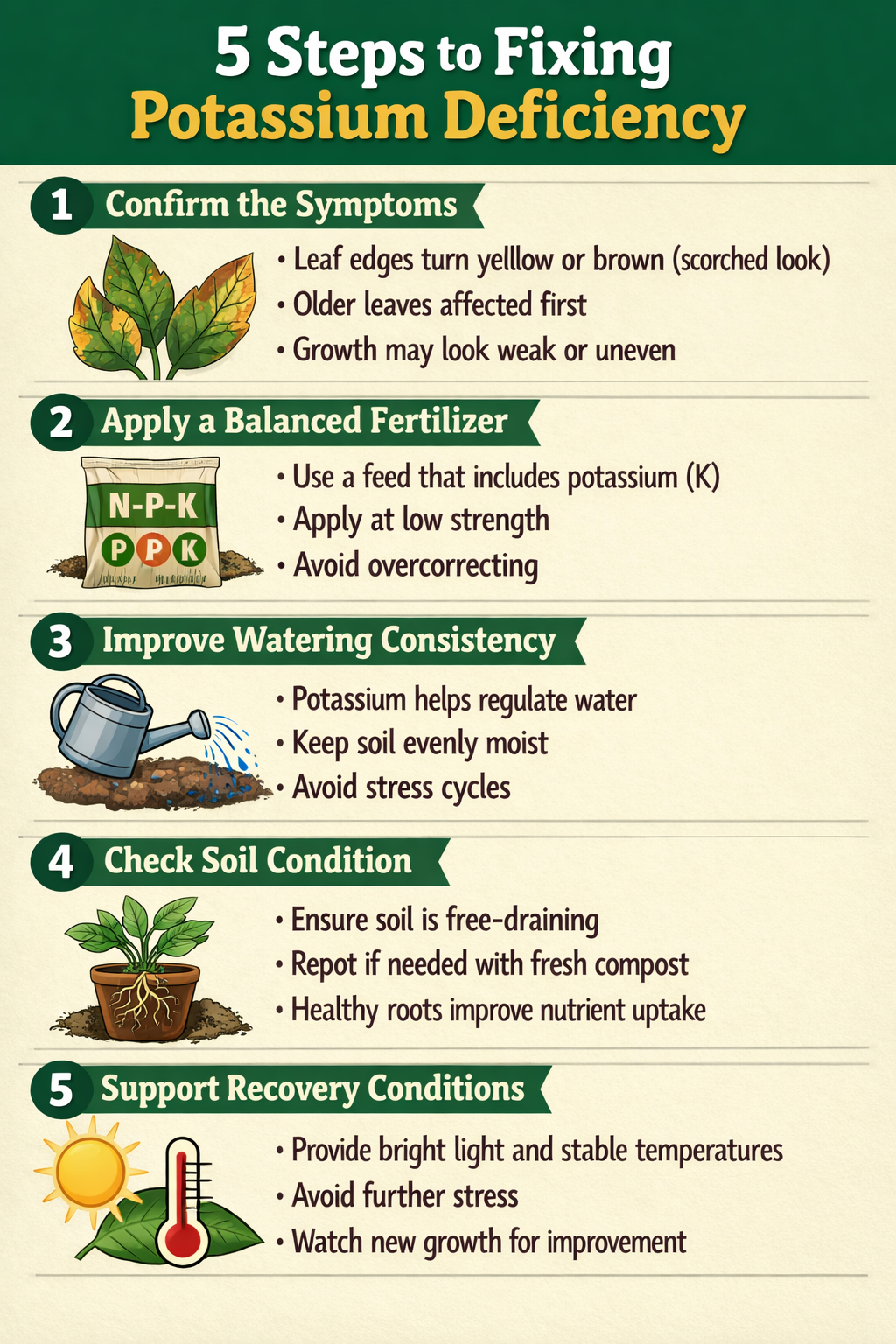
5 step guide to fixing potassium deficiency
Step 1: Confirm the symptoms
- Leaf edges turn yellow or brown (scorched look)
- Older leaves are affected first
- Growth may look weak or uneven
Step 2: Apply a balanced fertiliser
- Use a feed that includes potassium (K)
- Apply at low strength
- Avoid overcorrecting
Step 3: Improve watering consistency
- Potassium helps regulate water — but only if water is steady
- Keep soil evenly moist, not dry then soaked
- Avoid stress cycles
Step 4: Check soil condition
- Ensure soil is free-draining and not exhausted
- Repot if needed with fresh compost
- Healthy roots improve nutrient uptake
Step 5: Support recovery conditions
- Provide bright light and stable temperatures
- Avoid further stress
- Watch new growth for improvement
Best fertilisers & why
- Balanced liquid fertiliser
- Covers potassium along with other nutrients
- Safe and controlled
- Tomato-type feed (higher potassium)
- Useful once plants are established
- Helps strengthen growth
- Organic liquid feeds
- Gentle and supportive
For seedlings, balanced is best — don’t jump straight to strong potassium feeds.
Common issues, pests & diseases
Leaf edges browning but soil is dry
- Likely watering issue rather than potassium
- Fix watering first
No improvement after feeding
- Could be root or drainage problem
- Check soil and roots
Yellowing across entire plant
- More likely nitrogen or watering issue
- See: https://www.theonlinegardencenter.com/how-to-garden/why-are-my-plant-leaves-turning-yellow
Best fertiliser, soil, lighting & growing conditions
- Light
- Bright light supports strong growth
- Soil
- Fresh, well-draining compost
- Water
- Consistent moisture
- Feeding
- Light, balanced feeding
Potassium supports strength — but only works if conditions are stable.
Time of year
- More likely during active growth (spring)
- Appears as plants begin to develop more structure
- Often linked to exhausted compost
Climate and regional notes
UK & Ireland
- Inconsistent watering can exaggerate symptoms
- Light levels also play a role
Europe
- Northern regions similar to UK
- Southern regions may see faster recovery
USA
- Warmer climates increase nutrient demand
- Monitor watering closely
Pro tips for better recovery
- Fix watering before increasing feeding
- Focus on new growth — not damaged leaves
- Don’t overfeed trying to correct quickly
- Keep conditions stable
- Repot if soil is tired
10 frequently asked questions about potassium deficiency
What does potassium deficiency look like
Yellowing or browning at leaf edges, especially older leaves.
Can seedlings recover
Yes, once feeding and conditions are corrected.
How quickly will plants improve
New growth should look stronger within 1–2 weeks.
Do I need special fertiliser
Usually a balanced fertiliser is enough.
Can I use tomato feed
Yes, but lightly and only once plants are established.
Can overwatering cause similar symptoms
Yes, root stress can mimic deficiencies.
Should I repot my seedlings
If soil is poor or exhausted, it can help.
Is potassium deficiency common
Less common than nitrogen issues.
Will damaged leaves recover
No — focus on new growth.
Can inconsistent watering cause this
Yes, it often contributes.
Related guides
- If you’re unsure about feeding, start here: https://www.theonlinegardencenter.com/how-to-garden/how-to-use-fertilizers-with-my-seedlings
- Yellowing leaves can have different causes — check this: https://www.theonlinegardencenter.com/how-to-garden/why-are-my-plant-leaves-turning-yellow
- If growth is weak, light may be part of the issue — read this: https://www.theonlinegardencenter.com/how-to-garden/why-are-my-seedlings-leggy