Growing shrubs and trees from seed
Growing shrubs and trees from seed is slower than buying plants — but you get stronger, better-adapted plants and far more variety. The catch is this: many seeds won’t grow unless you break their natural dormancy.
This is where most people fail.
Quick answer: how to grow shrubs and trees from seed
Most shrub and tree seeds need pre-treatment (like chilling or scarification) to break dormancy. Sow in a free-draining mix, keep conditions stable, and expect slower, uneven germination.
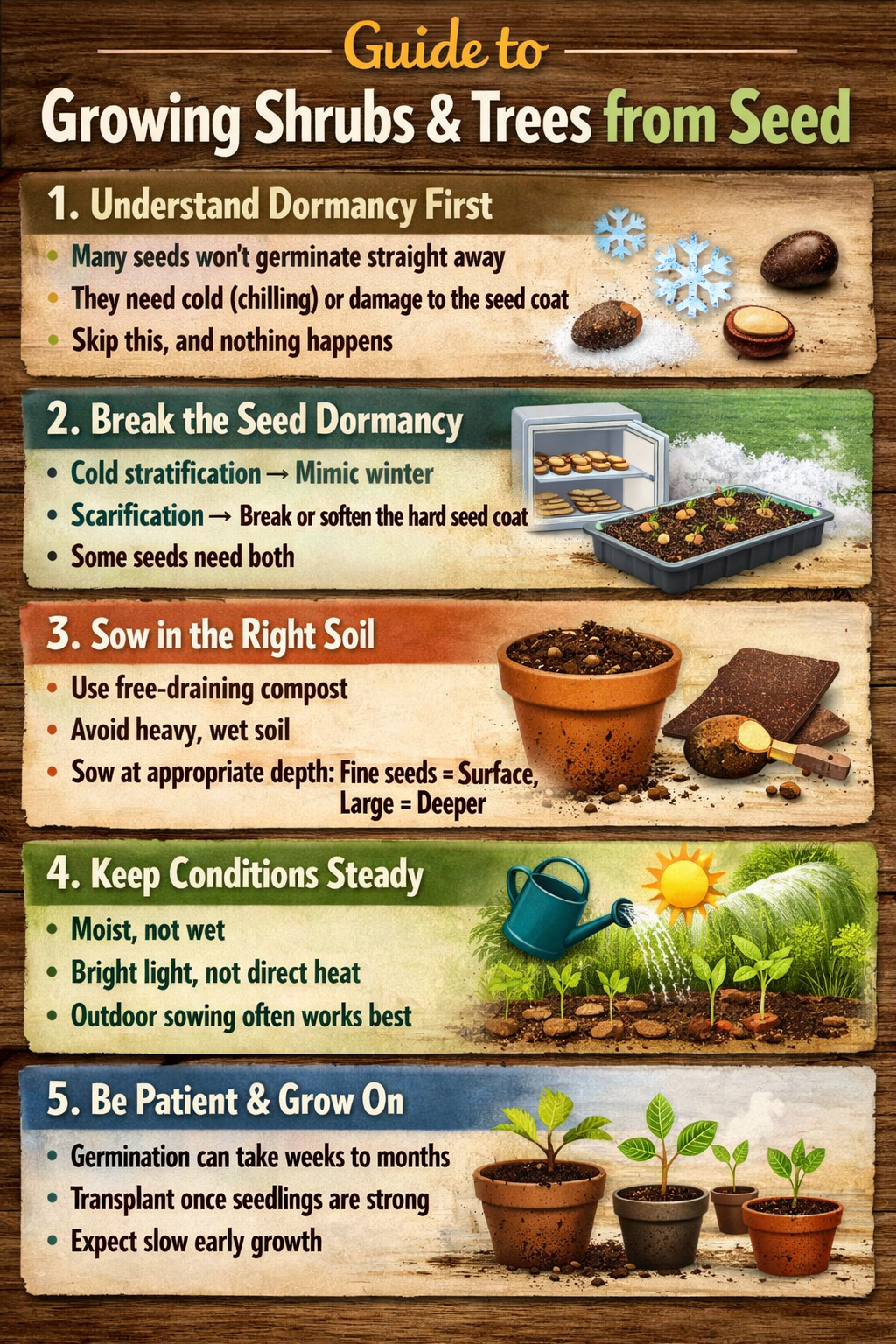
5 step guide to growing shrubs and trees from seed
Step 1: Understand dormancy first
- Many seeds won’t germinate straight away
- They need cold (chilling) or damage to the seed coat
- Skip this, and nothing happens
Step 2: Break the seed dormancy
- Cold stratification → mimic winter
- Scarification → break or soften the hard seed coat
- Some seeds need both
Step 3: Sow in the right soil
- Use free-draining compost
- Avoid heavy, wet soil
- Sow at appropriate depth (fine seeds = surface, large = deeper)
Step 4: Keep conditions steady
- Moist, not wet
- Bright light, not direct heat
- Outdoor sowing often works best for natural cycles
Step 5: Be patient and grow on
- Germination can take weeks to months (or longer)
- Transplant once seedlings are strong
- Expect slow early growth
Best varieties & why
Shrubs (reliable from seed)
- Lavender
- Needs chilling
- Long-lived and hardy
- Buddleia
- Easy and fast-growing
- Great for pollinators
- Cotoneaster
- Tough and adaptable
- Good for hedging
- Berberis
- Hardy and resilient
- Good structure
- Escallonia
- Coastal tolerant
- Evergreen option
- Viburnum
- Often needs dormancy breaking
- Great seasonal interest
- Hypericum (St John’s Wort)
- Easy and fast-growing
- Good ground cover
- Ceanothus
- Needs scarification
- Nitrogen-fixing
- Pyracantha
- Hardy and wildlife-friendly
- Needs chilling
- Hebe
- Good for milder climates
- Compact growth
Trees (good from seed)
- Oak (Quercus)
- Reliable and long-lived
- Germinates well fresh
- Beech (Fagus)
- Needs chilling
- Strong structure
- Birch (Betula)
- Light, fast-growing
- Easy from seed
- Maple (Acer)
- Often needs stratification
- Great for ornamental use
- Pine (Pinus)
- Simple but slow
- Good for structure
- Spruce (Picea)
- Reliable conifer
- Needs patience
- Rowan (Sorbus)
- Needs cold treatment
- Wildlife-friendly
- Hawthorn (Crataegus)
- Tough and adaptable
- Often needs long dormancy
- Cherry (Prunus)
- Requires chilling
- Can be slow
- Eucalyptus
- Faster-growing
- Does not require cold treatment
Start with birch, oak, or buddleia if you want easier results.
Common issues, pests & diseases
Seeds not germinating
- Cause: dormancy not broken
- Fix: apply chilling or scarification
- If you’re unsure which method to use, click here: https://www.theonlinegardencenter.com/how-to-garden/which-seeds-need-cold-stratification-vs-scarification
Rotting seeds
- Cause: too much moisture
- Fix: improve drainage and reduce watering
Mould during germination
- Cause: stagnant conditions
- Fix: improve airflow
- If mould keeps appearing, click here: https://www.theonlinegardencenter.com/how-to-garden/why-mould-appears-during-seed-germination
Slow or uneven germination
- Cause: natural dormancy cycles
- Fix: patience — this is normal
Best fertiliser, soil, lighting & growing conditions
- Light
- Bright, natural light
- Soil
- Free-draining compost
- Water
- Light, consistent moisture
- Feeding
- Minimal early on
- Airflow
- Helps prevent fungal issues
Heavy feeding early on does more harm than good.
Time of year
- Sow in autumn for natural chilling outdoors
- Or sow in late winter/spring after artificial stratification
- Some seeds may take a full year to germinate
This is not quick gardening — it’s long-term.
Climate and regional notes
UK & Ireland
- Natural winter conditions are ideal for stratification
- Outdoor sowing often works best
Europe
- Northern regions benefit from natural chilling
- Southern regions may need artificial cold treatment
USA
- Cold regions ideal for natural dormancy cycles
- Warmer regions require refrigeration for stratification
Pro tips for better success
- Always check if seeds need chilling or scarification
- Sow more than you need — success rates vary
- Label everything clearly
- Don’t disturb seeds too early
- Let nature do the work where possible
10 frequently asked questions about growing shrubs and trees from seed
Why are my seeds not germinating
Most likely dormancy hasn’t been broken.
What is seed dormancy
A natural delay mechanism that prevents immediate germination.
What is cold stratification
Exposing seeds to cold, moist conditions to trigger germination.
What is scarification
Breaking or softening the seed coat to allow water in.
Do all tree seeds need chilling
No, but many temperate species do.
How long does germination take
Weeks to months — sometimes longer.
Can I sow seeds directly outdoors
Yes, often the best method for trees and shrubs.
Why are my seeds rotting
Too much moisture or poor drainage.
Do I need to fertilise seedlings early
No, wait until plants are established.
Is growing trees from seed difficult
Not difficult — just slower and more process-driven.
Related guides
- If you don’t understand dormancy, start here: https://www.theonlinegardencenter.com/how-to-garden/which-seeds-need-cold-stratification-vs-scarification
- Soil matters more than you think — click here: https://www.theonlinegardencenter.com/how-to-garden/best-soil-mix-for-seed-germination
- If your seeds keep failing, fix this first: https://www.theonlinegardencenter.com/how-to-garden/why-mould-appears-during-seed-germination