
Fertilising a Monstera
Monsteras are vigorous growers, and regular feeding helps support larger leaves, stronger stems, and faster growth. Without enough nutrients, plants can become slow, pale, or produce smaller leaves.
Fertilising correctly is simple, but timing and balance matter.
Quick answer: how to fertilise a Monstera
Feed Monstera every 2–4 weeks during the growing season with a balanced liquid fertiliser. Reduce or stop feeding during slower growth periods.
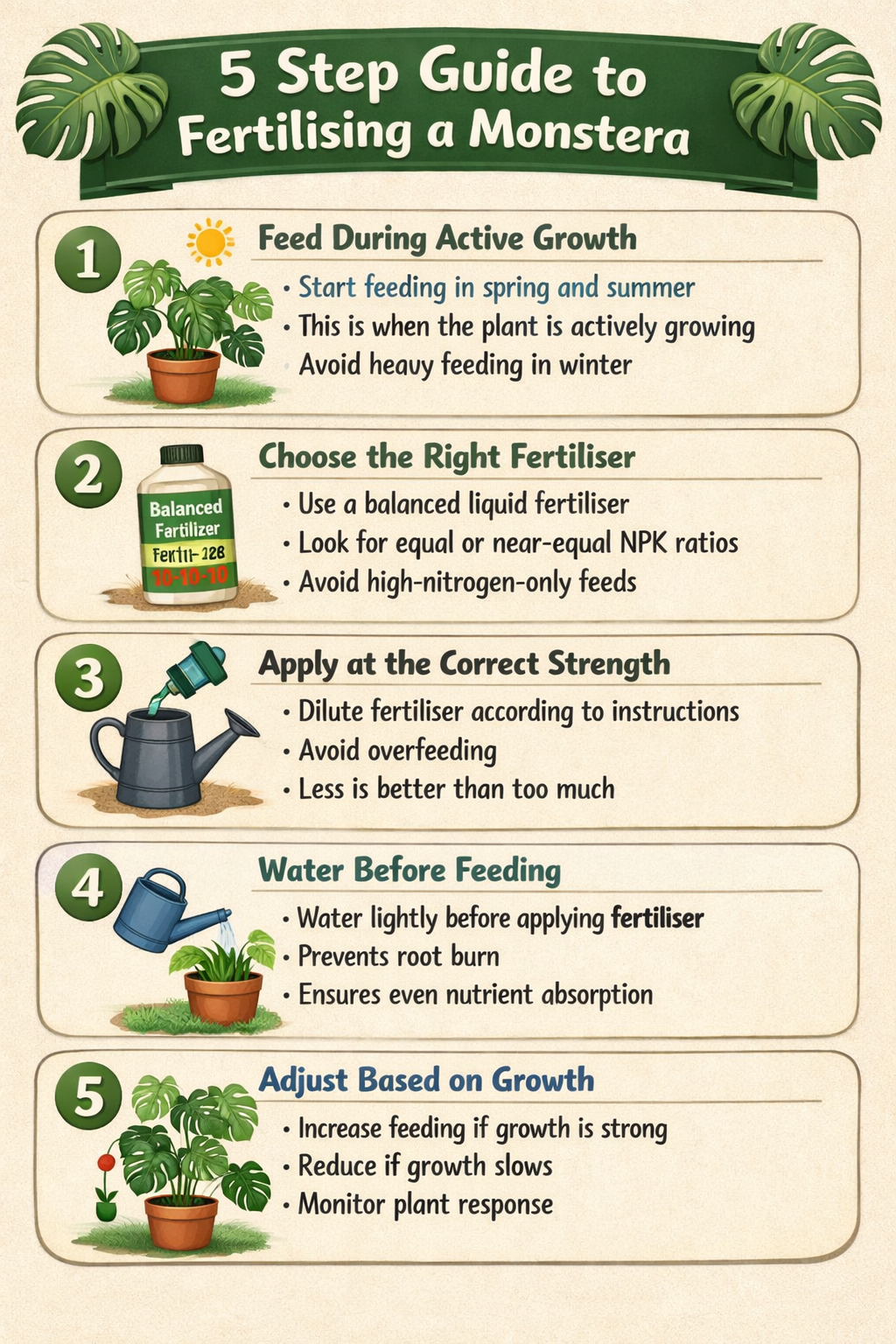
5 step guide to fertilising a Monstera
Step 1: Feed during active growth
- Start feeding in spring and summer
- This is when the plant is actively growing
- Avoid heavy feeding in winter
Step 2: Choose the right fertiliser
- Use a balanced liquid fertiliser
- Look for equal or near-equal NPK ratios
- Avoid high-nitrogen-only feeds
Step 3: Apply at the correct strength
- Dilute fertiliser according to instructions
- Avoid overfeeding
- Less is better than too much
Step 4: Water before feeding
- Water lightly before applying fertiliser
- Prevents root burn
- Ensures even nutrient absorption
Step 5: Adjust based on growth
- Increase feeding if growth is strong
- Reduce if growth slows
- Monitor plant response
Best fertilisers & why
- Balanced liquid fertiliser
- Easy to apply
- Supports overall growth
- Slow-release fertiliser
- Provides steady nutrients
- Lower maintenance
- Organic feeds (seaweed, compost-based)
- Gentle and improve soil health
Balanced fertilisers are best for consistent results.
Common issues, pests & diseases
Yellowing leaves
- Can indicate nutrient deficiency or overfeeding
- See: https://www.theonlinegardencenter.com/how-to-garden/why-are-my-plant-leaves-turning-yellow
Burnt leaf edges
- Caused by too much fertiliser
- Reduce feeding and flush soil
Weak or slow growth
- Often due to lack of nutrients
- Increase feeding during growing season
No fenestrations
- Usually linked to light, but feeding helps support growth
- See: https://www.theonlinegardencenter.com/how-to-garden/why-does-my-monstera-have-no-fenestrations
Best fertiliser, soil, lighting & growing conditions
- Light
- Bright, indirect light
- Soil
- Chunky, well-draining mix
- Water
- Moderate watering
- Allow top layer to dry
- Feeding
- Regular feeding during active growth
- Support
- Moss pole for better structure and growth
Climate and regional notes
UK & Ireland
- Feeding mainly during spring and summer
- Indoor growth slows in winter
Europe
- Northern regions follow similar pattern
- Southern regions may extend feeding season
USA
- Longer growing season in warmer regions
- Adjust feeding accordingly
Pro tips for better growth
- Feed little and often rather than heavily
- Do not fertilise dry soil
- Reduce feeding in winter
- Repot periodically to refresh nutrients
- Combine feeding with good light
10 frequently asked questions about fertilising Monstera
How often should I fertilise Monstera
Every 2–4 weeks during active growth.
What is the best fertiliser for Monstera
A balanced liquid fertiliser.
Can I overfertilise my Monstera
Yes, it can damage roots and leaves.
Should I fertilise in winter
No, or only very lightly.
Why are my Monstera leaves pale
Often due to lack of nutrients or light.
Do Monsteras need a lot of feeding
Moderate, consistent feeding works best.
Can I use organic fertiliser
Yes, it’s a good option for gentle feeding.
Should I water before feeding
Yes, to prevent root burn.
Does fertiliser affect leaf size
Yes, along with light and overall care.
Can fertiliser cause yellow leaves
Yes, if overapplied.
See: https://www.theonlinegardencenter.com/how-to-garden/why-are-my-plant-leaves-turning-yellow