Dormancy and Winter Treatment of Bulbs (When to Lift, Store, and Replant)
Understanding dormancy is what separates bulbs that thrive year after year from those that quietly disappear. Not all bulbs behave the same—some want to stay in the ground, others must be lifted and protected.
If you get this wrong, you either lose bulbs to rot and frost… or waste time lifting ones that would have been better left alone.
Quick Answer
Hardy bulbs can usually be left in the ground, while tender bulbs should be lifted after foliage dies back, stored over winter, and replanted in spring. Only lift bulbs that won’t survive cold, wet conditions.
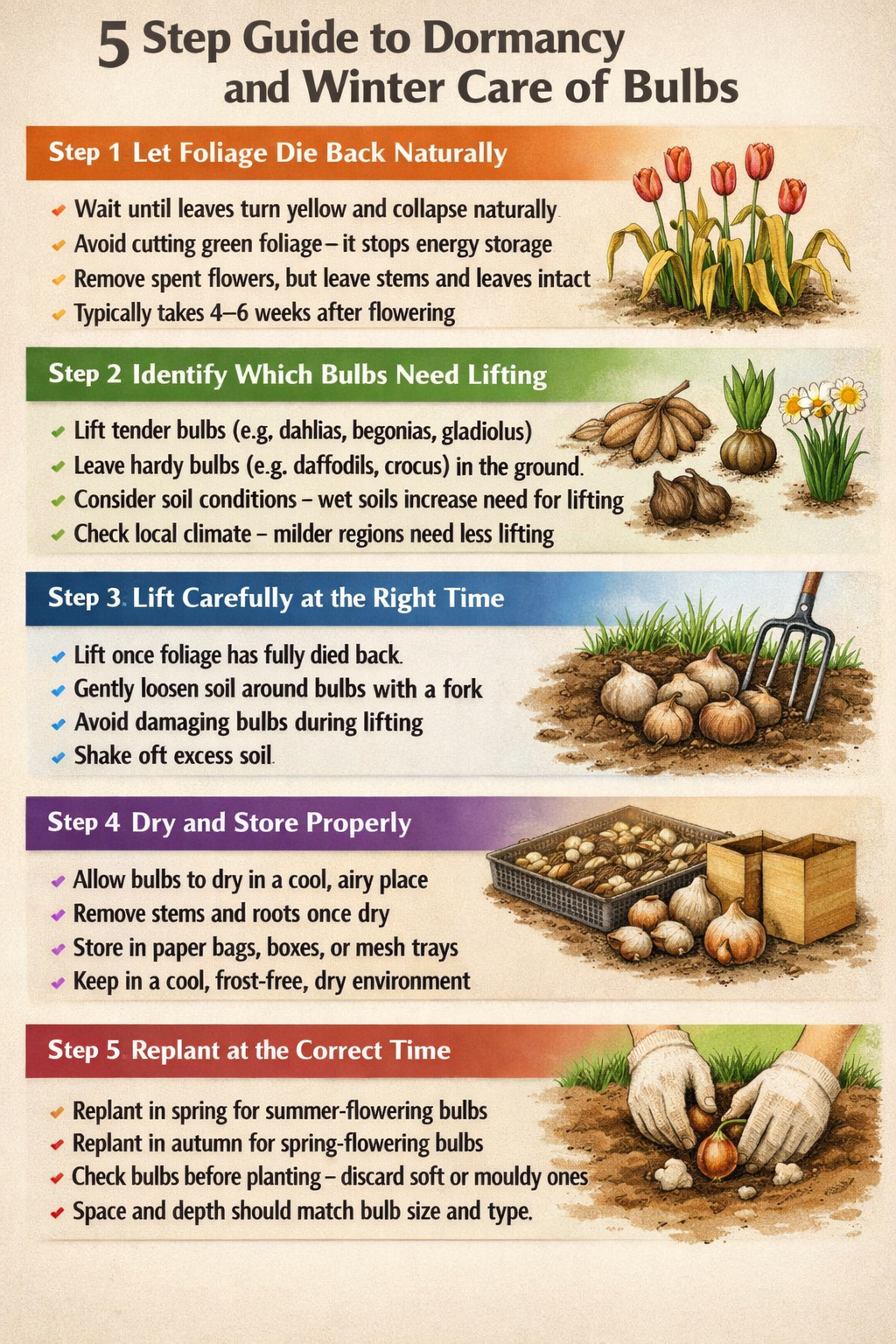
5 Step Guide to Dormancy and Winter Care of Bulbs
Step 1: Let Foliage Die Back Naturally
This is where next year’s flowers are formed.
- Wait until leaves turn yellow and collapse naturally
- Avoid cutting green foliage—it stops energy storage
- Remove spent flowers, but leave stems and leaves intact
- This process typically takes 4–6 weeks after flowering
Step 2: Identify Which Bulbs Need Lifting
Not all bulbs require intervention.
- Lift tender bulbs (e.g. dahlias, begonias, gladiolus)
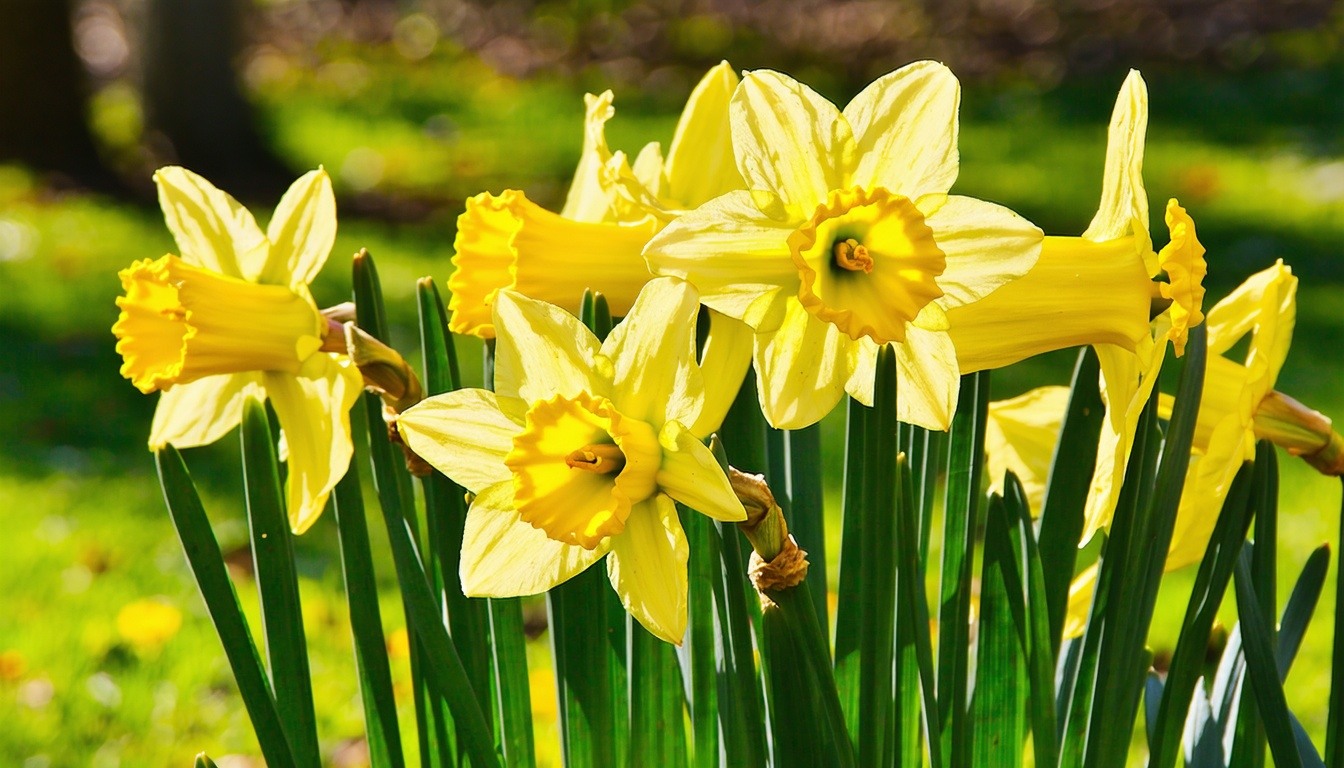
- Leave hardy bulbs (e.g. daffodils, crocus) in the ground
- Consider soil conditions—wet soils increase need for lifting
- Check local climate—milder regions need less lifting
Step 3: Lift Carefully at the Right Time
Timing affects survival and next season’s performance.
- Lift once foliage has fully died back
- Use a fork to gently loosen soil around bulbs
- Avoid damaging bulbs during lifting
- Shake off excess soil without washing (unless very dirty)
Step 4: Dry and Store Properly
Storage conditions are critical.
- Allow bulbs to dry in a cool, airy place for several days
- Remove remaining stems and roots once dry
- Store in paper bags, boxes, or mesh trays
- Keep in a cool, frost-free, dry environment
Step 5: Replant at the Correct Time
Replanting too early or too late reduces performance.
- Replant in spring for summer-flowering bulbs
- Replant in autumn for spring-flowering bulbs
- Check bulbs before planting—discard soft or mouldy ones
- Space and depth should match bulb size and type
Best Varieties & Why (Dormancy Behaviour)
Bulbs That SHOULD Be Lifted (Tender)
- Dahlias (Dahlia)
- Begonias (tuberous)
- Gladiolus
- Eucomis (in colder/wet areas)
Bulbs That Can Stay in the Ground (Hardy)
- Daffodils (Narcissus)
- Crocus
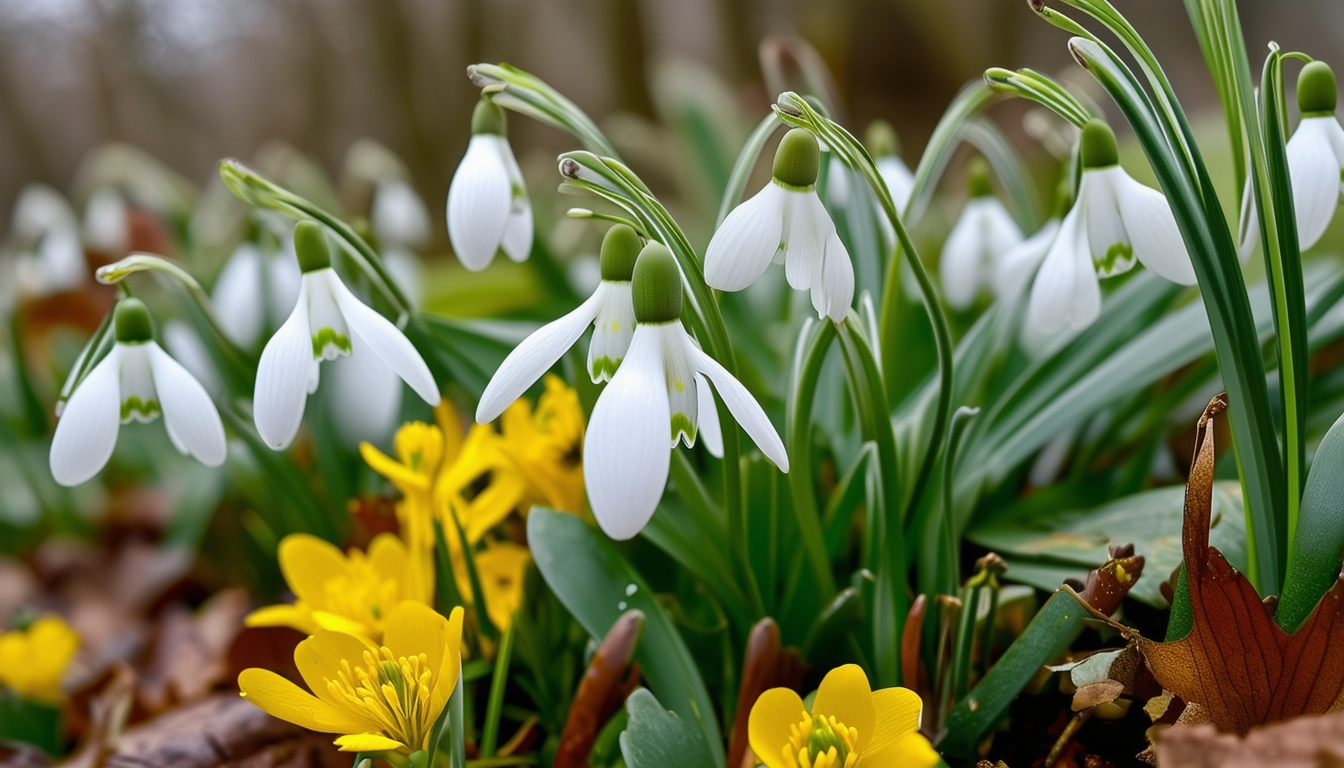
- Snowdrops (Galanthus)
- Alliums
Bulbs That Are Optional (Depends on Conditions)
- Tulips (often lifted for best performance)
- Lilies (can stay if drainage is good)
Knowing which category your bulbs fall into saves a lot of unnecessary work.
Common Issues, Pests & Diseases
- Bulb rot in storage – caused by insufficient drying or poor ventilation
- Shrivelling bulbs – storage too warm or dry
- Mould growth – excess moisture during storage
- Poor flowering next year – cutting foliage too early
Most storage problems come down to moisture control.
Best Fertiliser, Soil, Lighting & Growing Conditions
- Fertiliser: Apply during growing season, not during dormancy
- Soil: Free-draining soil reduces need for lifting
- Light: Depends on bulb type during growth phase
- Water: Reduce significantly once dormancy begins
- Pruning: Only remove dead material after full dieback
If you're improving soil drainage → click here
Time of Year
- Late summer to autumn: Foliage dies back; lifting begins
- Autumn to winter: Storage period for tender bulbs
- Spring: Replanting of summer bulbs
- Spring to summer: Growth and flowering phase
Timing varies slightly by climate, but the sequence remains consistent.
Plant Characteristics
(Dormant bulbs typically:)
- Store energy underground during inactive periods
- Die back above ground annually
- Require a rest period before regrowth
- Vary in cold tolerance depending on species
Climate and Regional Notes
- Ireland & UK: Many bulbs can remain in the ground, but wet winters increase rot risk
- Cold climates: More bulbs require lifting due to frost
- Mild climates: Fewer bulbs need lifting, but drainage still matters
In Irish conditions, moisture is often a bigger issue than cold.
Pro Tips
- Label stored bulbs—it’s easy to forget what’s what
- Check bulbs monthly in storage for rot or mould
- Dust with sulphur powder if rot has been an issue
- Store different bulb types separately
- Don’t rush lifting—timing matters more than speed
A well-stored bulb is already halfway to a good display next year.
Frequently Asked Questions
What does dormancy mean for bulbs?
It’s a resting phase where the plant dies back above ground and stores energy below for the next season.
Do all bulbs need to be lifted?
No—only tender bulbs or those in poor conditions benefit from lifting.
When should I lift bulbs?
After foliage has completely died back, usually late summer or autumn.
Can I leave bulbs in pots over winter?
Yes, but ensure pots are well-drained and protected from excessive wet.
How do I know if a bulb is still healthy?
It should feel firm—soft or mouldy bulbs should be discarded.
Should I wash bulbs before storing?
Only if very dirty—otherwise keep them dry to avoid rot.
Where should I store bulbs?
In a cool, dry, frost-free place with good airflow.
Do bulbs need light during storage?
No—dark conditions are fine during dormancy.
Why didn’t my bulbs flower after storage?
Often due to poor storage conditions or cutting foliage too early.
Can I divide bulbs when lifting them?
Yes—this is a good time to separate offsets and propagate.
What Bulbs Is This Relevant To
Definitely Lift
- Dahlias
- Begonias
- Gladiolus
- Tender exotics
Usually Leave in Ground
- Daffodils
- Crocus
- Snowdrops
- Scilla
Depends on Conditions
- Tulips (often lifted for better flowering)
- Lilies (leave if soil drains well)
- Alliums (generally hardy but dislike wet soil)
This distinction is what prevents unnecessary work—or unnecessary losses.
Related Guides
Closing Section
Dormancy isn’t something to manage aggressively—it’s something to respect. Let bulbs complete their natural cycle, step in only where needed, and focus on the few that actually require lifting.
Do that, and you’ll avoid the two biggest mistakes: losing tender bulbs to winter… or overhandling the ones that were perfectly fine on their own.